

PMT: Cutting Assessment Time and Costs by 44% for a more HR Efficiency
B2B, SaaS, HR Management System, Web application, Performance Management Tool, 2019.
I. Introduction
Overview
PMT is an advanced B2B SaaS platform tailor-made to transform traditional human resource management into a dynamic and integrated system. Positioned at the intersection of talent management and technological innovation, it harmoniously merges with HCM and other business systems to offer real-time insights into both individual and organisational performance. Its standout feature, the Career Path tool, epitomises the platform’s commitment to nurturing a well-informed workforce, a deeply engaged workforce, and strategically aligned with the company’s growth objectives.
The Goal
The primary goal in developing PMT was to streamline and enhance the employee evaluation process, accelerate onboarding, and clarify career development opportunities. By addressing these key aspects, PMT seeks to boost overall employee satisfaction and motivation, fostering a workplace environment where individuals and the organisation can thrive. This system is designed to support employees in understanding their potential career trajectories within the company and engage more effectively with the organisational culture and goals.
Segment Problems
Traditional performance management systems often fall short of addressing the complex and dynamic needs of modern organisations. These systems are plagued by several critical issues that impair individual development and organisational growth:
- Feedback and Communication Challenges:
- Many employees are left uncertain about their contributions due to a lack of feedback.
- Poor communication limits meaningful discussions on goals and expectations.
-
Employee performance assessments often lack objectivity, and feedback may not be comprehensive or timely.
- Managerial and Training Deficiencies:
- Without proper training, managers lack the skills to evaluate and support employee growth, leading to inconsistent practices.
- Gaining manager support is crucial for the success of performance management programs.
-
Resistance from within the organisation is a significant hurdle when new processes or technologies are introduced.
- Performance Management System Flaws:
- Traditional performance reviews often focus on past behaviours rather than current capabilities or future potential.
- Performance management often operates in isolation from other HR functions, leading to disjointed practices.
-
The time-consuming nature of traditional performance reviews often leads to delays and impacts the timeliness and relevance of feedback.
- Work Environment and Employee Morale Issues:
- Factors like inadequate recognition and reward, poor work-life balance, and a negative work environment lead to decreased productivity.
-
Performance reviews often lack balance and sufficient follow-up support, impacting employee development and morale.
- Career Development and Progression:
- Lack of clear career paths leads to decreased employee engagement and higher turnover rates.
- Modern careers are no longer linear but are dynamic, with frequent changes in skill requirements and job roles.
- Many employees cite a lack of career growth opportunities and poor job fit as reasons for leaving an organisation.
-
Identifying and coaching high-potential employees across various roles is crucial for filling key positions effectively and ensuring organisational longevity.
- Technological and Analytical Limitations:
- Organisations often lack awareness of skills gaps and fail to conduct regular performance reviews.
-
Inconsistent standards can undermine the credibility of performance management.
PMT seeks to transform the performance management landscape by introducing a system designed to focus on real-time improvement, continuous feedback, and strategic alignment of individual and organisational goals. With features like just-in-time feedback, AI-driven contextual suggestions, and comprehensive career path tools, PMT not only addresses the current needs of employees but also supports their evolving career aspirations and the strategic objectives of the organisation. This holistic approach ensures that performance management becomes a catalyst for genuine growth and engagement across all company levels.
Solutions
PMT addresses these challenges by introducing a suite of features that transform the employee experience:
-
Real-Time Feedback and Evaluations. Moving from traditional annual reviews to a dynamic feedback system that reflects immediate job performance and growth opportunities.
-
Transparent and Accessible Career Pathways. Integrating a robust Career Path tool that outlines potential vertical and lateral career moves, encouraging employees to envision and work towards future roles within the organisation.
-
Enhanced Onboarding Processes. Utilizing the platform’s sophisticated integration capabilities to provide new hires with a seamless transition into their roles, aligning them quickly and effectively with company culture and expectations.
Achievements
Since its launch, PMT has notably improved the efficiency of HR operations, reducing the time required for performance assessments and the cost of conducting review assessments by 44%.
These efficiencies have streamlined HR processes and enhanced the precision of career development planning. As a result, the platform has contributed to significantly higher employee engagement, retention, and overall satisfaction, demonstrating its impact on reducing operational costs while boosting workplace morale and productivity.
My Role
As the Lead Product Designer, I was tasked with integrating design principles and technologies to craft a user-friendly interface that caters to the diverse needs of all users, from entry-level employees to top-tier management.
My Responsibilities
-
User-Centric Design. Focusing on intuitive usability and accessibility ensures that every feature of PMT is engaging and easy to use.
-
Data-Driven Enhancements. Leveraging real-time data to refine and optimise the user experience continuously.
-
Stakeholder Collaboration. Working closely with stakeholders to align the platform’s development with overarching business objectives and ensure that every design decision supports the organisation’s strategic vision.
II. Research and Analysis
Market Research and Benchmarking
To strategically position PMT in the competitive landscape of performance management systems, I conducted an in-depth benchmarking analysis against leading platforms. This analysis helped identify trends, benchmark features, and user expectations, forming a foundational understanding of the market space in which PMT operates. Below is a brief summation of the first seven products, followed by a comparison analysis based on their feature sets:
-
Reflektive: Focuses on real-time feedback and performance reviews, promoting a culture of continuous improvement and engagement within teams.
-
Qualtrics: Offers a robust survey tool suite that integrates seamlessly with analytics to gauge employee experience and performance.
-
Skills Base: Specializes in skill tracking and competency management, helping organisations to identify and close skill gaps.
-
Impraise: Provides tools for performance reviews, goal management, and instant feedback to foster professional growth and development.
-
Culture Amp: Combines analytics and feedback to drive employee engagement and retention through data-driven insights.
-
Weekdone: Utilizes OKRs (Objectives and Key Results) to enhance team productivity and alignment through structured goal-setting and weekly check-ins.
-
Lattice: Offers performance management solutions, including continuous performance tracking, goal setting, and one-on-one meeting planning.
Feature Comparison Analysis
To delineate the unique propositions of PMT against its competitors, I compared the following essential features across systems:
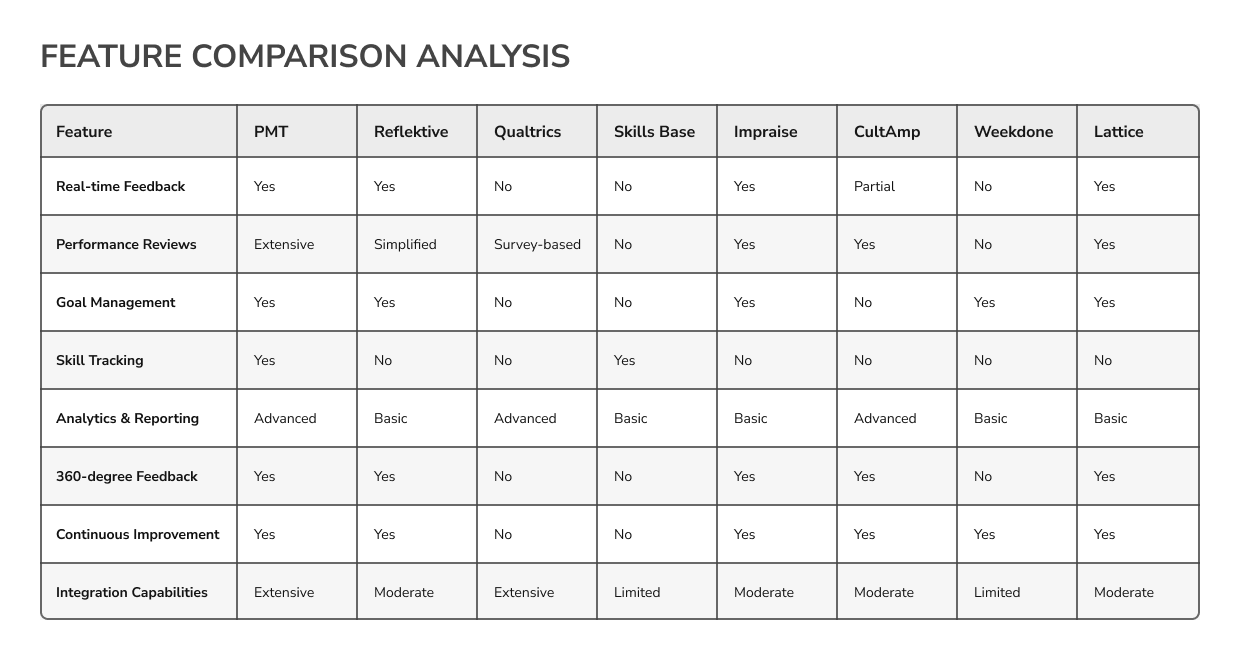
Insights from the comparison:
-
Comprehensive Feedback: Unlike some competitors that offer simplified feedback mechanisms, PMT integrates comprehensive 360-degree feedback, real-time feedback, and continuous improvement tools, ensuring a holistic approach to performance management.
-
Advanced Analytics: PMT stands out with its advanced analytics and reporting features, surpassing many competitors who offer basic or moderate capabilities. This allows for deeper insights into performance trends and more informed decision-making.
-
Skill Tracking and Development: Unlike many platforms that focus solely on performance reviews or goal management, PMT offers a unique feature set that includes skill tracking, directly addressing competency management needs within organisations.
Through this analysis, PMT is positioned as a robust, feature-rich platform designed to meet the diverse needs of modern organisations by facilitating not just performance reviews but also fostering an environment of continuous development and strategic alignment.
Requirement Gathering
The process of requirement gathering and contextual inquiry for PMT was designed to capture a deep understanding of the HRMS needs within diverse organisational environments. By conducting detailed stakeholder interviews and analysing industry benchmarks, I was able to identify critical areas where PMT can add substantial value. This section has been enhanced with more domain insights and highlights PMT’s unique position as a comprehensive HRMS through stakeholder interviews.
Stakeholder Interviews
The stakeholder interviews were structured to extract detailed insights into the current limitations of existing systems and the strategic needs for future enhancements. The following key questions helped in shaping the development of PMT:
- What are the primary drivers of success in our organisation?
-
Understanding this helps tailor PMT to enhance those drivers through better alignment of HR processes with organisational goals.
-
- How could a new HRMS enhance our organisational performance?
-
Insights gathered emphasise the need for an HRMS that tracks performance and actively enhances it through strategic insights and data-driven decision-making.
-
- What changes would you like to see in our current performance management process?
-
Feedback highlighted the need for more agility and real-time analytics in performance management, which PMT addresses with its dynamic feedback systems.
-
- What are your key criteria for a successful HRMS implementation?
-
Integration capabilities, user-friendly interfaces, and robust data security measures were identified as critical for adoption and effectiveness.
-
- What metrics or KPIs should our new system improve?
-
Stakeholders identified employee engagement rates, turnover rates, and performance review efficiencies as key metrics for enhancement.
-
- How do you see the integration of real-time feedback affecting day-to-day operations?
-
Real-time feedback is a game-changer for improving immediate employee performance and aiding quicker strategic adjustments.
-
- What features are most lacking in our current system?
-
A need for better career development planning tools and more comprehensive analytics capabilities were highlighted.
-
- What are your long-term goals for employee engagement?
-
The focus is on creating a more engaging, rewarding, and development-focused work environment, which PMT supports through its engagement modules.
-
- How important are mobility and accessibility in our new HRMS?
-
High importance is placed on these aspects to accommodate remote work trends and ensure system accessibility on multiple devices.
-
- What data security features are essential for our needs?
-
Strong encryption, multi-factor authentication, and regular security audits were noted as essential features.
-
Key Findings
My analysis identified several strategic design targets that PMT is engineered to meet:
-
Reducing review cycle times by 30%: PMT’s streamlined processes and automation significantly cut down the time required for performance reviews.
-
Increasing user engagement metrics by 40%: With interactive dashboards, real-time feedback, and personalised career development plans, PMT actively boosts engagement.
-
Improving the accuracy of performance data collection: Enhanced data integrity features and advanced analytics ensure that data collected is both accurate and actionable.
Domain Insights
The HRMS landscape is rapidly evolving, with increasing demands for systems that offer more than just administrative functions. Modern HRMS solutions, like PMT, are expected to be strategic tools that:
- Facilitate continuous learning and development.
- Provide predictive analytics to forecast future trends and needs.
- Integrate seamlessly with other business systems for holistic management.
- Offer flexible and adaptive tools that cater to a global and diverse workforce.
PMT’s Value as an HRMS
PMT distinguishes itself by not only fulfilling essential HR functions but also by acting as a strategic partner in organisational development. Its capabilities in handling complex analytics, providing real-time feedback, and facilitating proactive career development align perfectly with the needs of modern businesses looking to thrive in a dynamic global market. Through its comprehensive suite of features, PMT empowers organisations to harness the full potential of their human capital, driving growth and innovation.
Business Model Canvas and Lean Canvas
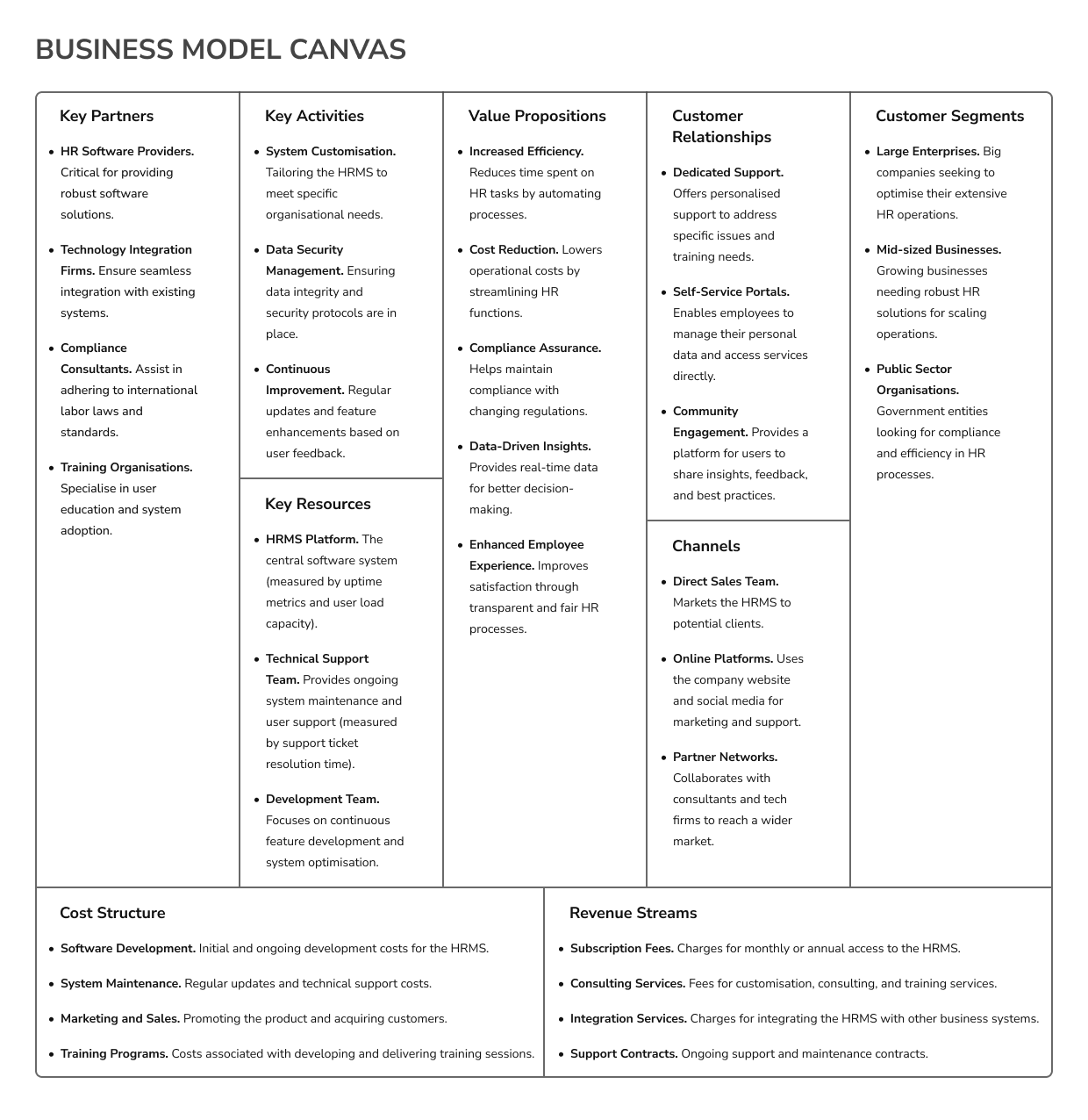
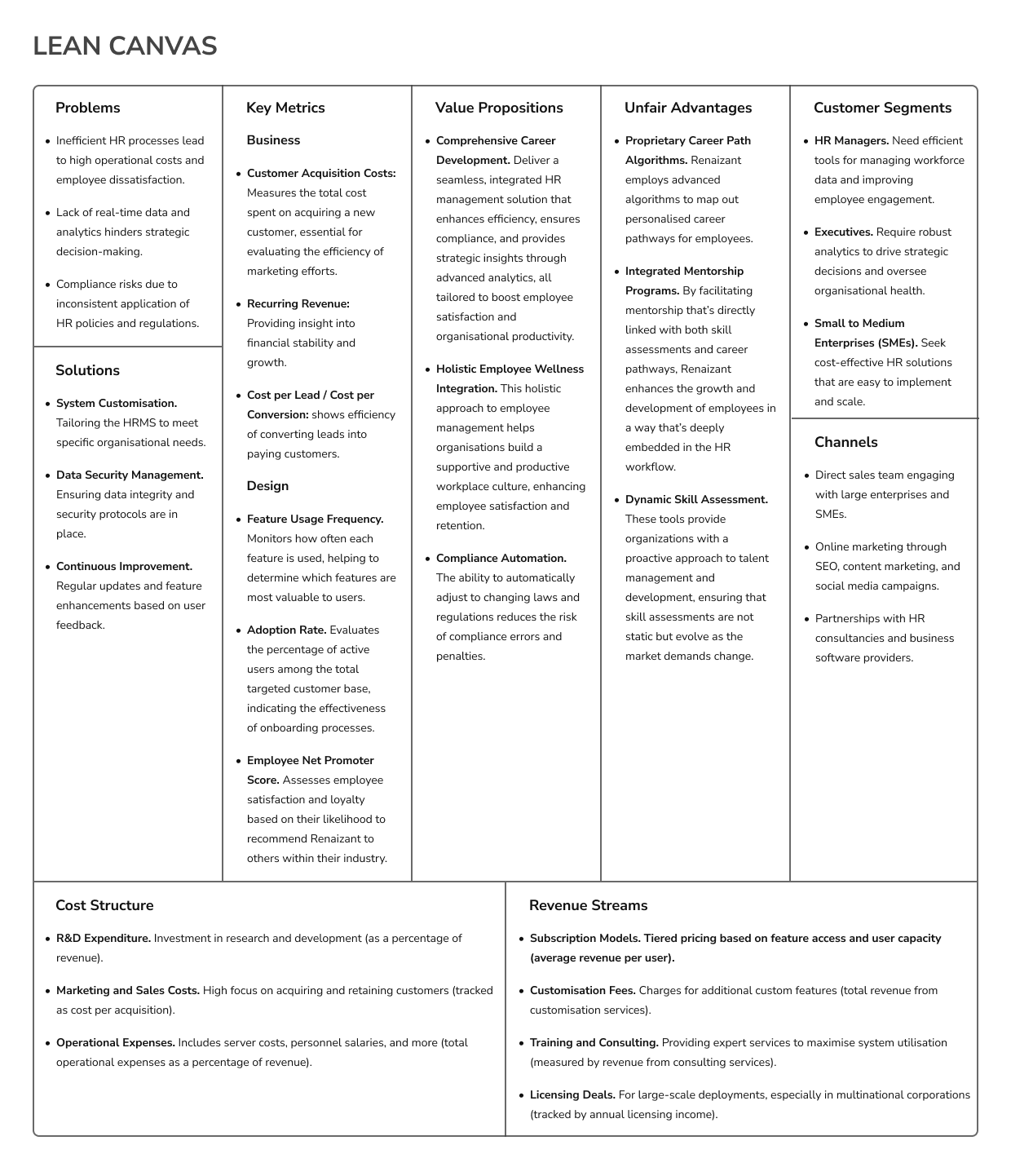
In the early stages of developing Renaizant, it was crucial to establish a solid foundation for our business model and product strategy. This is why my team and I decided to focus heavily on creating and collecting data for both the Business Model Canvas (BMC) and the Lean Canvas as integral parts of our resource section.
Creating these canvases involved gathering comprehensive data that spanned market research, customer insights, competitive analysis, and internal capabilities. The purpose was to align our team on the strategic direction and identify key resources that would drive Renaizant’s success.
Why do these stages go hand in hand?
The BMC and Lean Canvas complement each other by focusing on different aspects of the business strategy. The BMC allowed my team and I to map out the critical components of our business, such as our value propositions, customer segments, channels, and revenue streams. It gave us a broad view of how our business operates and what drives our economic engine.
On the other hand, the Lean Canvas is a more agile tool that focuses on addressing specific problems, outlining potential solutions, and identifying key metrics and competitive advantages. It’s particularly useful for startups and new products like Renaizant because it’s designed to address uncertainty and risk.
By developing these canvases in tandem, we ensured that every aspect of Renaizant—from our understanding of the user’s problems to the specifics of our business model—was thoroughly considered. This dual approach allowed us to pivot quickly, validate assumptions, and refine our business model based on feedback and emerging market insights.
Importance in the early stages
In the initial phase of Renaizant’s development, these canvases were indispensable. They helped us:
- Clarify our business purpose by defining the problems we’re solving and for whom and detailing our unique value propositions.
- Align the team, ensuring that every team member, from developers to marketers, understands their role in delivering value to our customers.
- Prioritise resources by identifying key resources and activities, we could allocate our efforts more effectively and avoid wasting time and money on less critical tasks.
- Attracting investors by showing them how we planned to make Renaizant profitable and sustainable from the business and design perspectives.
Incorporating these strategic tools at the very beginning of Renaizant’s journey was a critical decision. It provided a clear roadmap and allowed us to navigate the complexities of launching a new HRM solution with greater confidence and precision.
User Research and System Roles
User Interviews
To precisely tailor PMT to meet the diverse needs of its users, I designed and conducted structured interviews across three primary roles within organisations: Employees, Managers, and Admins. These interviews were aimed at uncovering the specific challenges, preferences, and expectations each role has regarding the HRMS. By carefully crafting targeted questions for each group, I was able to gather rich, actionable insights that have directly influenced the development and customisation of PMT’s features. This approach ensures that the system addresses the functional requirements and enhances the daily operational experience for all users, thereby increasing engagement and satisfaction.
Employees:
- How do you currently receive feedback on your performance?
- What tools do you use most frequently at work?
- What challenges do you face in understanding your career progression?
- What features would help you feel more engaged with our performance management process?
- How does the current system support your work-life balance?
- What would make goal-setting easier for you?
- How transparent do you find the current review process?
- What motivates you to use our HRMS actively?
- What data security concerns do you have with our current HRMS?
- How could a new system better support your daily tasks?
Managers:
- What challenges do you face in providing feedback to team members?
- How do you track your team’s progress on objectives?
- What tools do you need to support your team better?
- What aspects of the current HRMS do you find cumbersome?
- How could the review process be improved to save you time?
- What analytics would help you manage your team more effectively?
- How do you handle career development discussions currently?
- What features would help you identify high-potential employees?
- How important is mobile access to our HRMS for your role?
- What training do you think is necessary for effectively using a new HRMS?
Admins:
- What administrative challenges do you face with the current HRMS?
- How do you manage data integrity and security?
- What features would streamline your administrative tasks?
- How could system integrations improve your workflow?
- What reporting capabilities are essential for your role?
- How do you ensure compliance with data protection regulations?
- What tools do you use to monitor system performance?
- What challenges do you face in rolling out new features or updates?
- How do you train new users on the HRMS?
- What feedback have you received from users about the current system?
Insights from User Interviews
The structured interviews provided deep insights into the day-to-day challenges and needs of users across these roles. Employees highlighted the need for clearer feedback and better visibility into career paths. Managers emphasised the importance of tools for effective team management and performance tracking. Admins focused on the need for robust data security and system flexibility to manage changing organisational structures.
This enhanced understanding of user needs has been instrumental in shaping PMT’s features and functionalities, ensuring that the system is robust and comprehensive and tailored to enhance the productivity and satisfaction of all user groups within an organisation. By aligning these system roles with specific use cases, PMT is positioned to deliver targeted solutions that address the unique challenges faced by each role, thereby enhancing overall organisational effectiveness.
System Roles
To ensure that PMT effectively meets the diverse needs of its users, I conducted targeted user research, focusing on the specific roles within organisations that would interact with the HRMS. This research involved structured interviews and a detailed analysis of role-specific use cases. Below, I define the system roles and describe their use cases based on the insights gathered.
Employees are the end users who interact with PMT daily for personal performance management and career development.
Use Cases:
-
Feedback Reception: As an Employee, I can receive real-time feedback from peers, managers, and subordinates to understand my performance continuously.
-
Goal Setting and Tracking: I can set personal objectives and track my progress, ensuring alignment with team and organisational goals.
-
Skill Development: I can access training modules and skill development programs tailored to my career path and job requirements.
-
Performance Reviews: I can participate in performance review cycles, providing self-assessments and receiving evaluations from managers.
-
Career Planning: I can view potential career paths within the organisation and understand the skills required for future roles.
Managers use PMT to oversee their team’s performance, facilitate development, and ensure that team objectives align with organisational goals.
Use Cases:
-
Team Performance Monitoring: As a Manager, I can monitor real-time performance data for my team to identify areas of improvement and success.
-
Feedback Provision: I can provide timely and constructive feedback to team members to foster their professional growth.
-
Objective Oversight: I can set, assign, and track objectives for team members, adjusting them as needed based on performance data.
-
Succession Planning: I can identify potential leaders within my team and plan development activities to prepare them for future roles.
-
Reporting: I can generate detailed reports on team performance, goal achievement, and training needs to inform upper management.
Admins are responsible for the overall management of PMT, including configuration, data management, and user access control.
Use Cases:
-
System Configuration: As an Admin, I can configure system settings, including permission levels, to accommodate organisational changes.
-
User Management: I can add, modify, or remove user accounts to ensure accurate access to the system.
-
Data Integrity and Security: I can oversee data security protocols and ensure compliance with data protection regulations.
-
Integration Management: I can manage integrations with other business systems to ensure seamless data flow and functionality.
-
Analytics and Reporting: I can access advanced analytics tools to monitor system usage, gather insights on organisational performance, and report to stakeholders.
End User Pain Points
Employees are the backbone of any organisation, and their engagement and satisfaction are crucial for overall productivity and success. However, they often face several challenges within traditional HRMS platforms:
-
Lack of Clarity on Performance Criteria: Employees often struggle with unclear performance standards, leading to confusion about expectations and how their work is evaluated.
-
Infrequent and Delayed Feedback: Without regular feedback, employees miss opportunities for timely improvements and feel disconnected from their personal development goals.
-
Limited Visibility into Career Progression: Many systems do not provide clear pathways or the necessary tools for employees to visualise and plan their career advancements within the company.
-
Difficulty in Balancing Work and Personal Development: Employees often find it challenging to access training and development resources aligned with their personal and professional growth aspirations.
Managers play a key role in mediating between organisational goals and employee performance. However, they encounter specific pain points that can hinder their effectiveness:
-
Inefficient Team Performance Tracking: Managers often lack the tools to effectively monitor and analyse the performance data of their teams in real-time.
-
Challenges in Providing Constructive Feedback: The absence of structured feedback tools makes it difficult for managers to provide actionable and supportive feedback to team members.
-
Difficulty in Objective Alignment and Tracking: Aligning team objectives with organisational goals and tracking their progress can be cumbersome without intuitive and integrated tools.
-
Limited Support for Succession Planning: Identifying and developing potential leaders within the team is often hindered by a lack of insights into employees’ skills and career aspirations.
-
Administrative Burden: Managers frequently face a high administrative load that can detract from their core leadership and developmental roles.
Admins are responsible for the smooth operation of the HRMS across the organisation, and they face unique challenges that can impact system efficacy and user satisfaction:
-
Complex System Configuration and Management: Admins often deal with complex system settings and configurations that require a high level of technical expertise.
-
Data Security Concerns: Ensuring the security and integrity of sensitive employee data is a constant challenge in the face of evolving cyber threats.
-
Integration Issues: Seamlessly integrating the HRMS with other business systems can be problematic, leading to data silos and inefficiencies.
-
Scalability Limitations: As organisations grow, admins need a system that can easily scale and adapt to changing needs without extensive customisation or downtime.
-
User Adoption and Training: Admins struggle with ensuring widespread adoption of the HRMS and must often invest considerable time in user training and support.
By addressing these pain points, PMT not only aims to enhance the user experience across all levels of the organisation but also ensures that the system supports effective management practices, aligns with career development goals, and maintains organisational integrity and security.
User Persona Development
In the development of PMT, understanding the diverse needs and expectations of all user groups within an organisation is paramount. To achieve this, I have crafted user personas representing key end-users: Employees, Managers, and Admins. These personas are foundational in the design process, ensuring that PMT is functional and resonates with users on a personal level. Each persona has been developed through extensive user research, including interviews and scenario analyses, to capture authentic user profiles that reflect real-world challenges, responsibilities, and technological interactions within their respective roles.
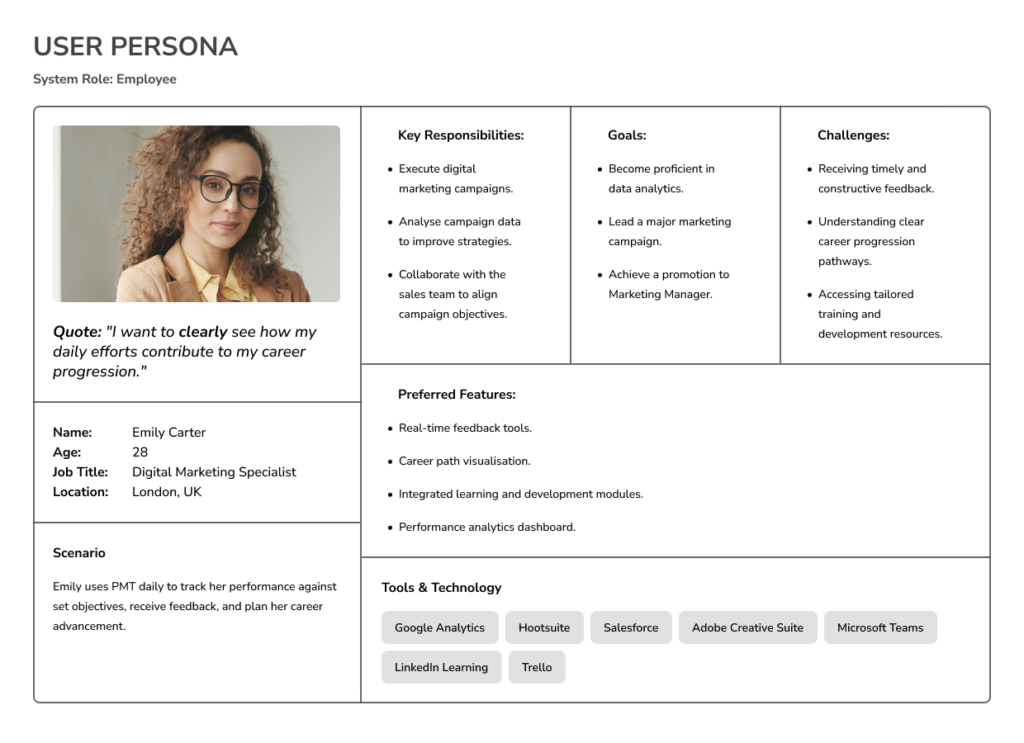
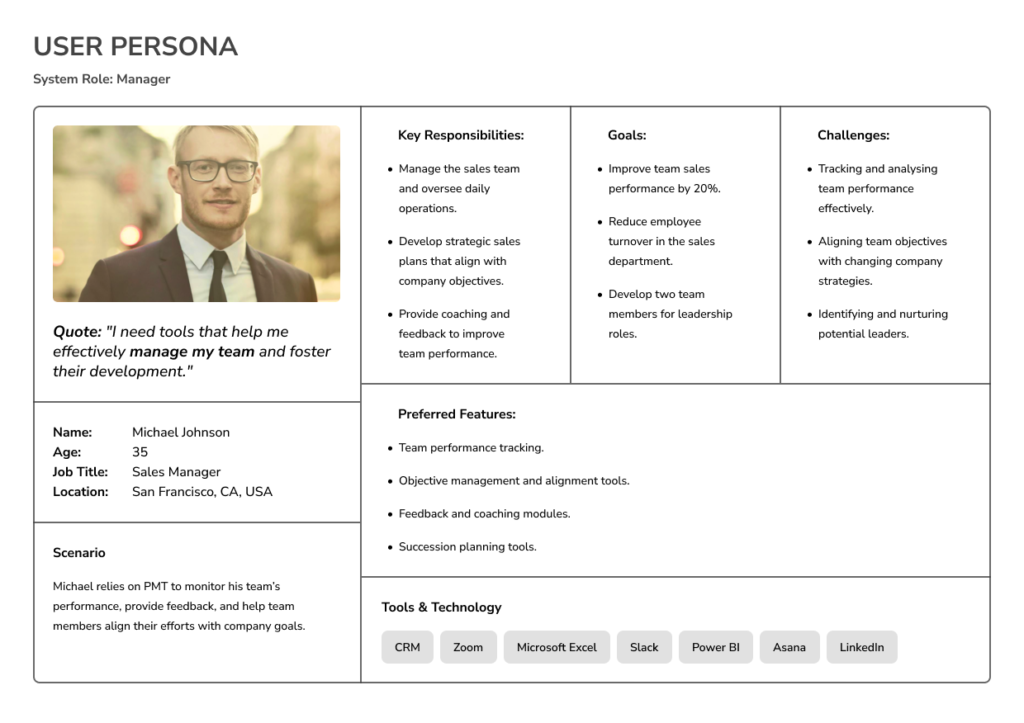
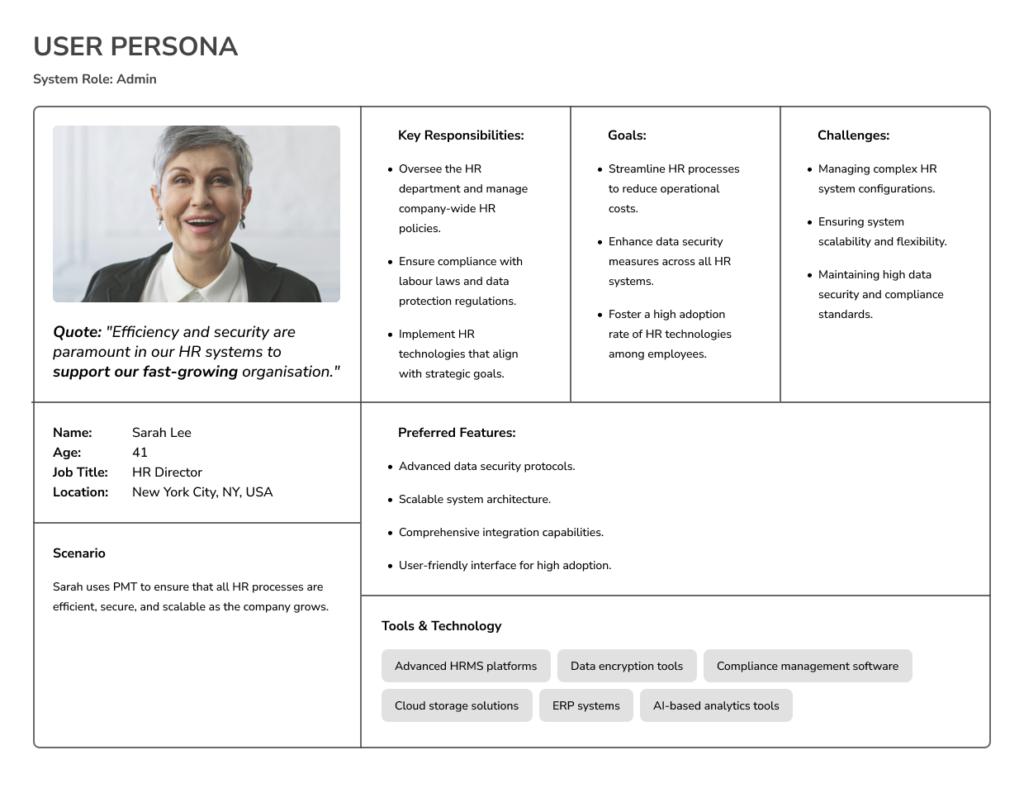
As I move forward, these personas will guide the UX design process, influencing everything from interface layout to the customisation of features. They will also play a vital role in the testing phases, where scenarios derived from these personas will help validate the effectiveness of the system and its alignment with user needs. Ultimately, the insights gained from these personas underscore my commitment to delivering a user-centric HRMS that not only fulfils organisational objectives but also enhances the day-to-day experiences of its users, fostering a more productive and engaged workforce.
III. UX Design Process
Introduction
The design process for PMT was meticulously crafted to address both the strategic goals of HR management and the daily operational needs of its users. It incorporated a comprehensive approach, integrating user-centred design principles and business analysis to create a robust HRMS platform that enhances user experience and optimises HR operations.
Design Considerations
The design team considered several key factors to ensure the platform’s usability and effectiveness:
- Accessibility: Ensuring the interface is intuitive and accessible for all users, regardless of technical skill.
- Customization: Allowing for personalisation to meet the varying needs of different organisational roles.
- Scalability: Designing a system that could grow and evolve with the company.
- Integration: Seamless integration with existing tools and systems within organisations.
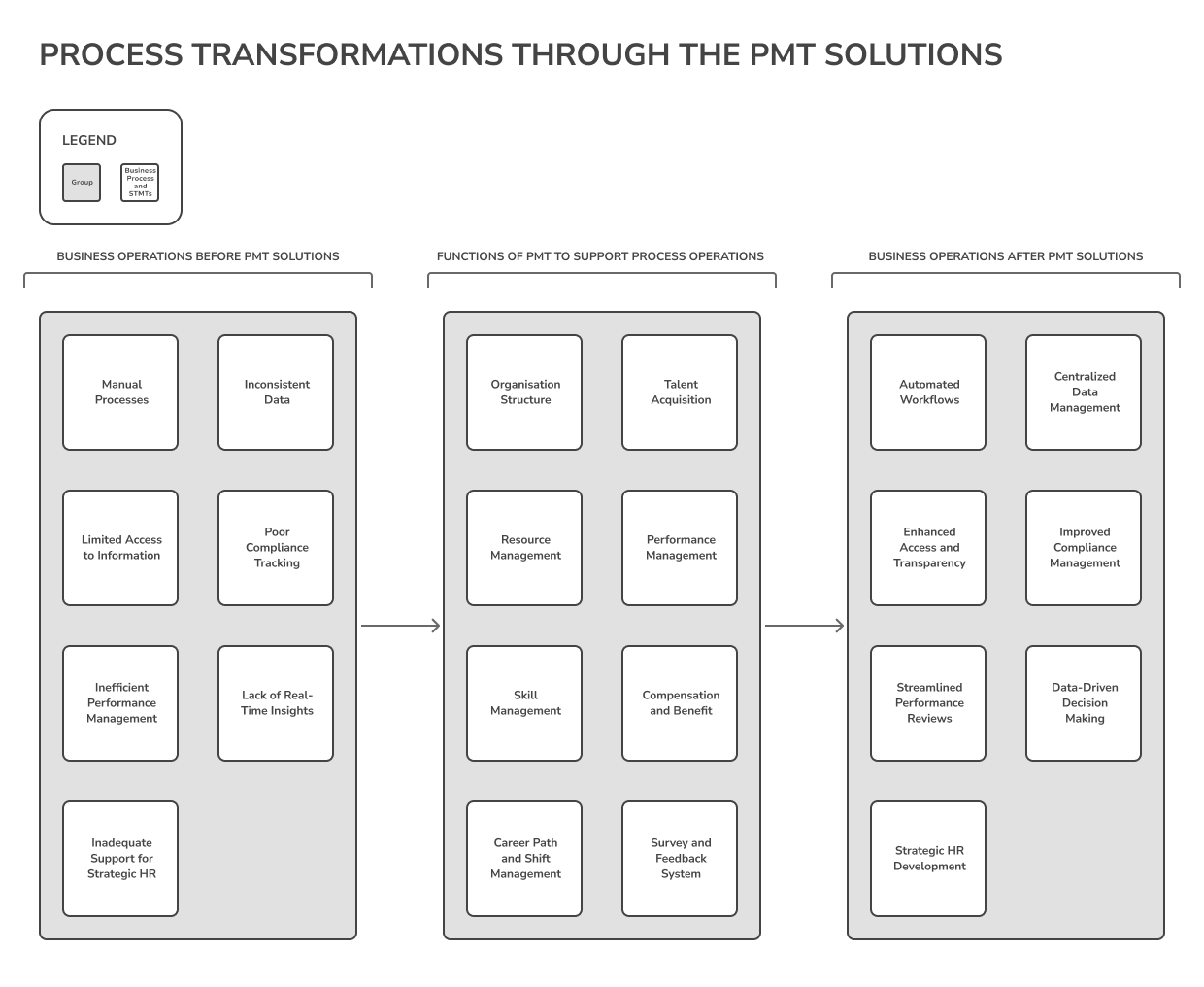
Business Process Transformations through PMT Solutions
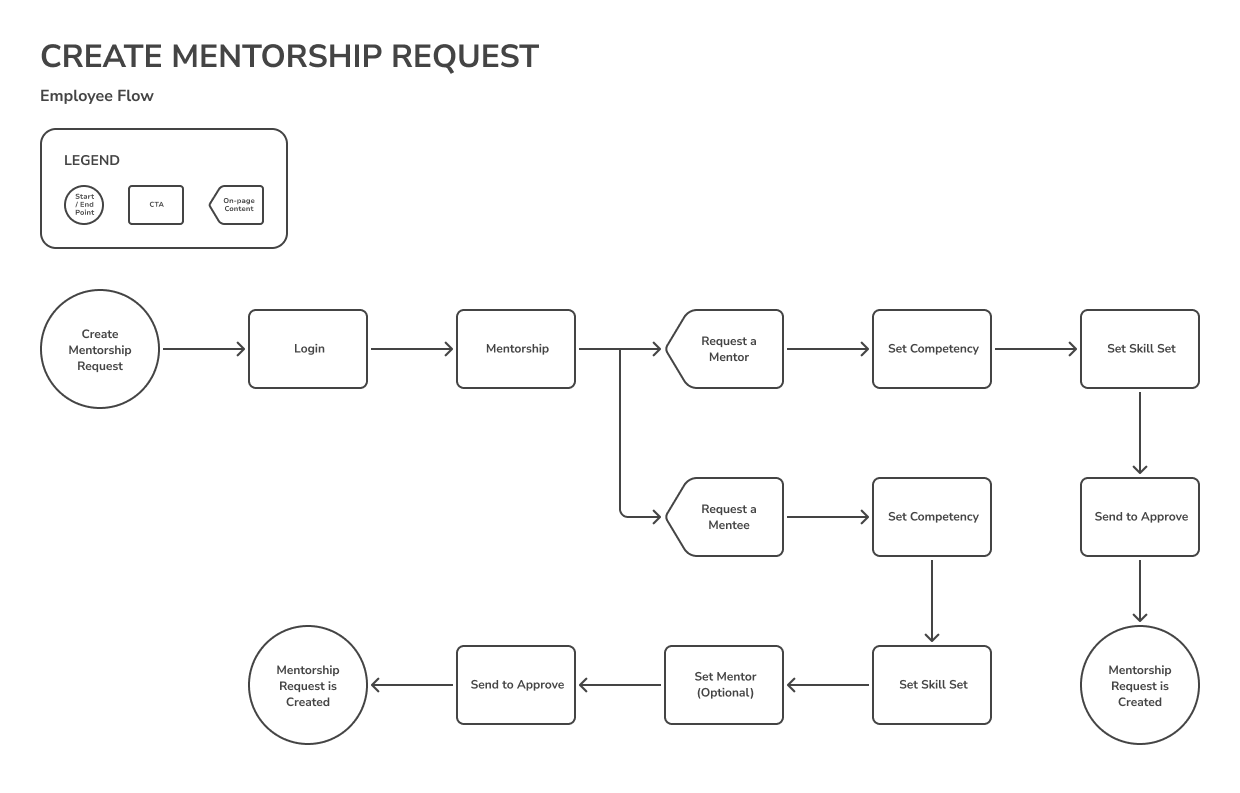
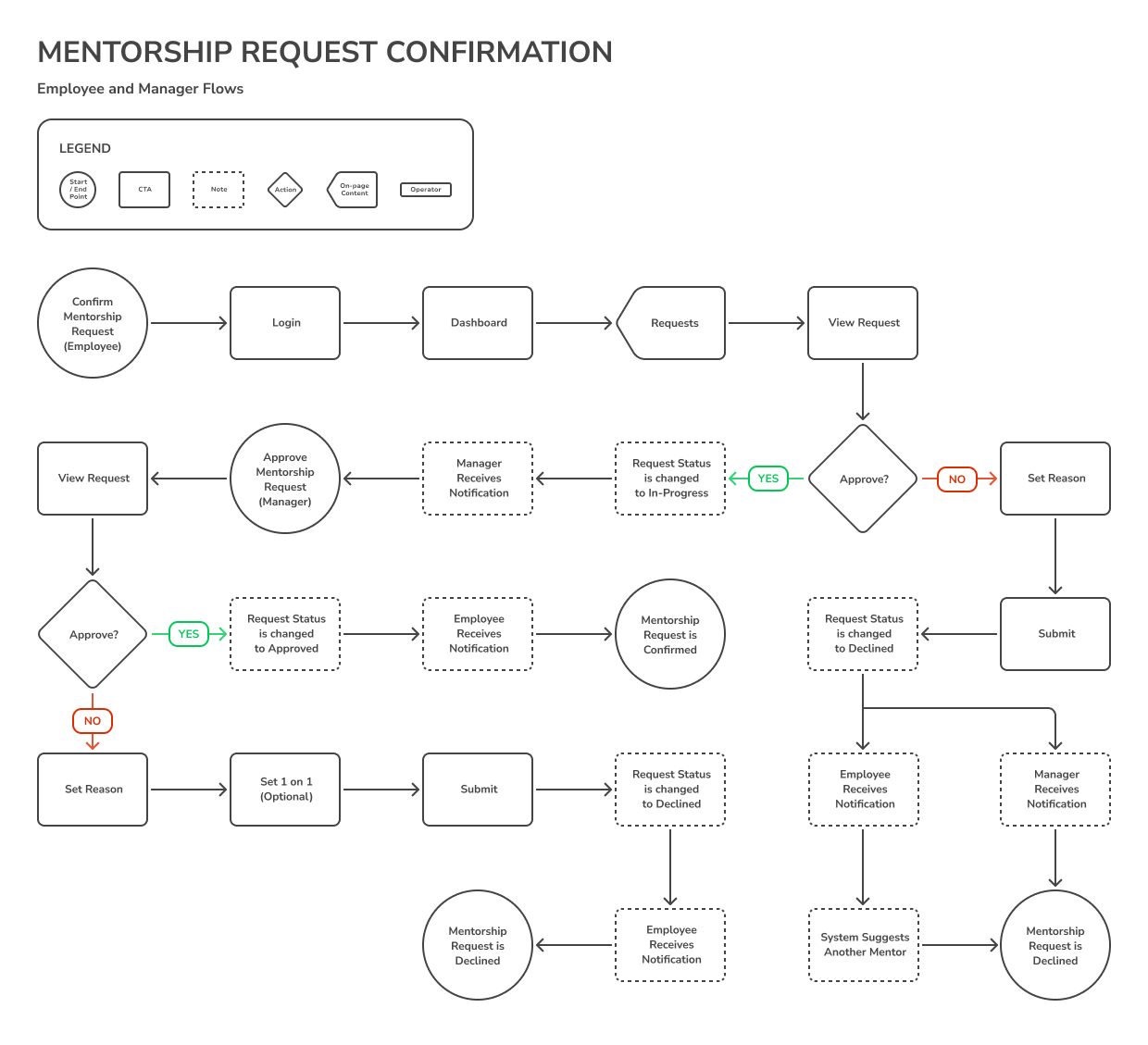
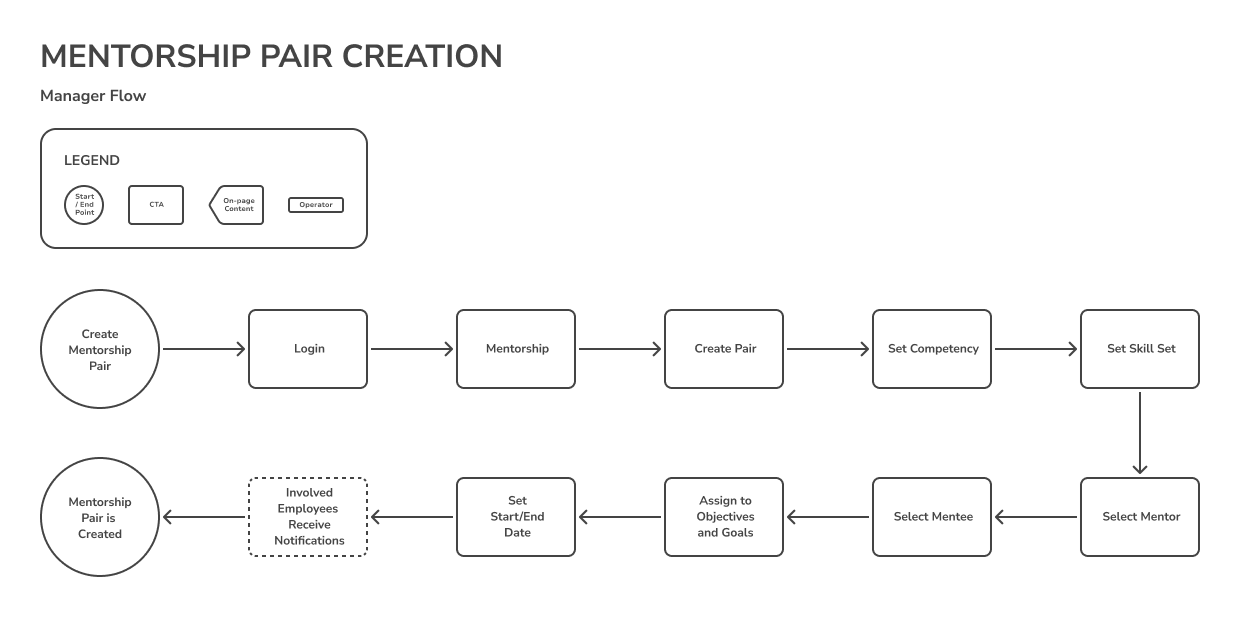
I developed detailed visual diagrams to map the existing HR processes and how PMT could enhance or streamline these processes. These diagrams served as a communication tool to align all stakeholders on the envisioned workflow improvements and system capabilities.
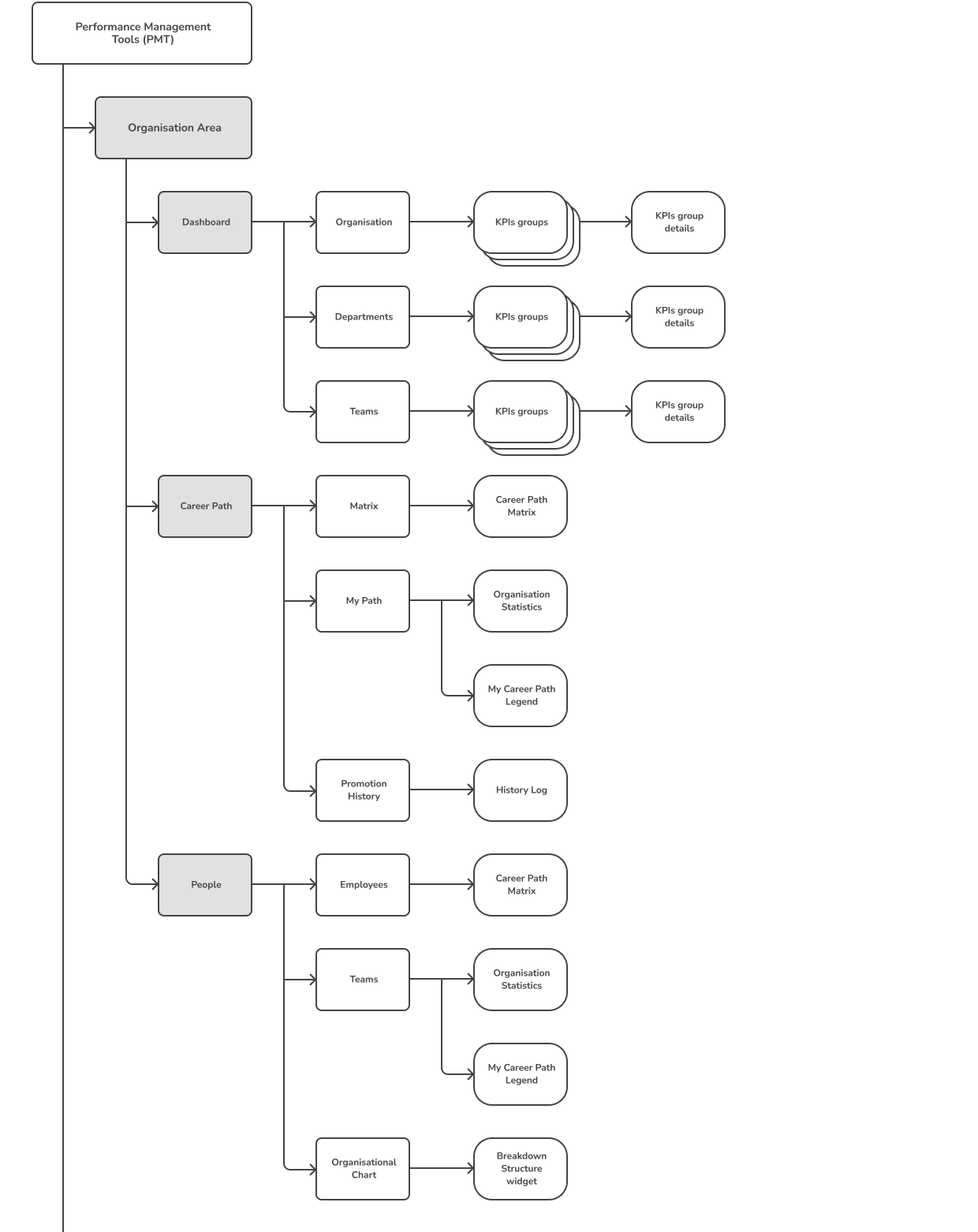
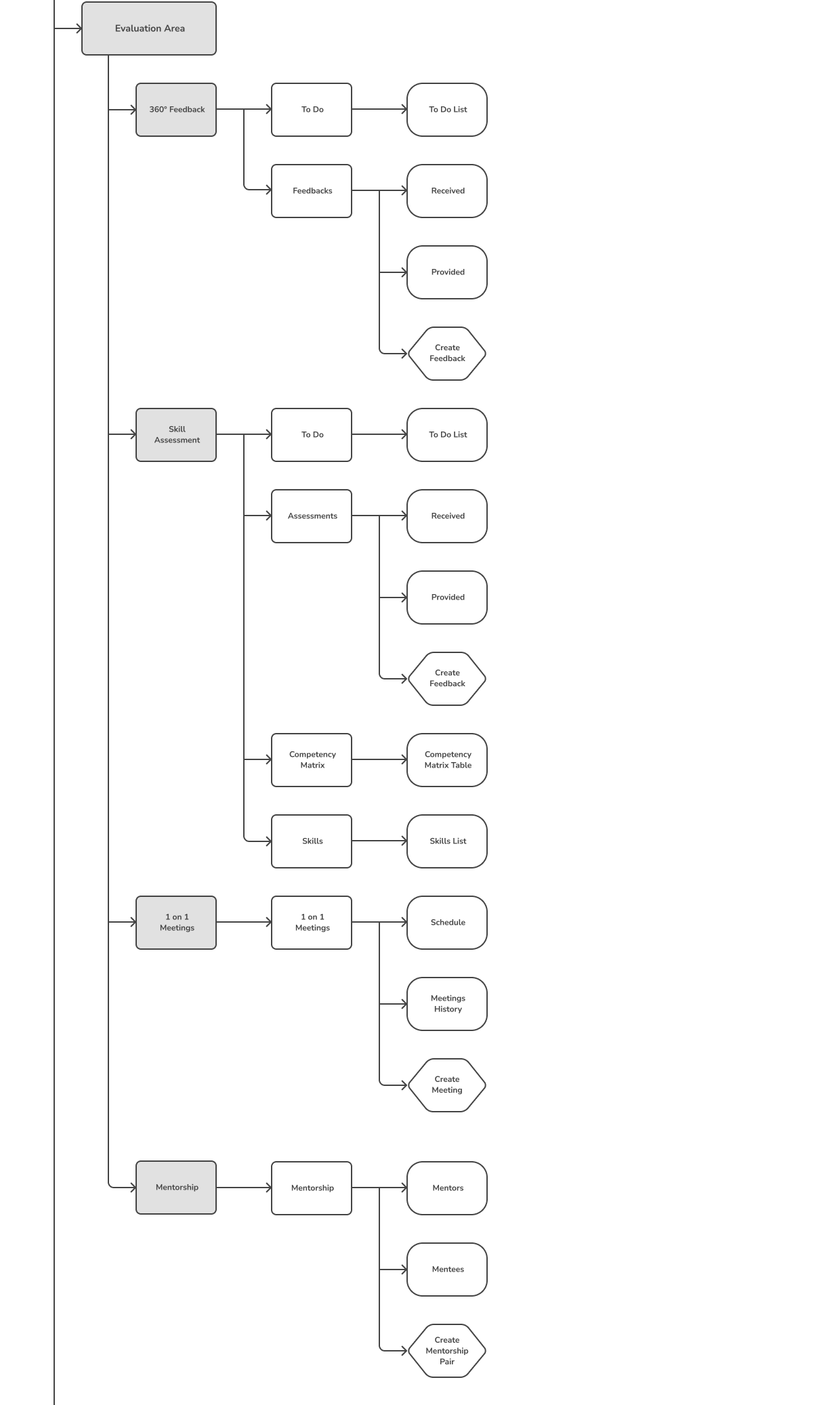
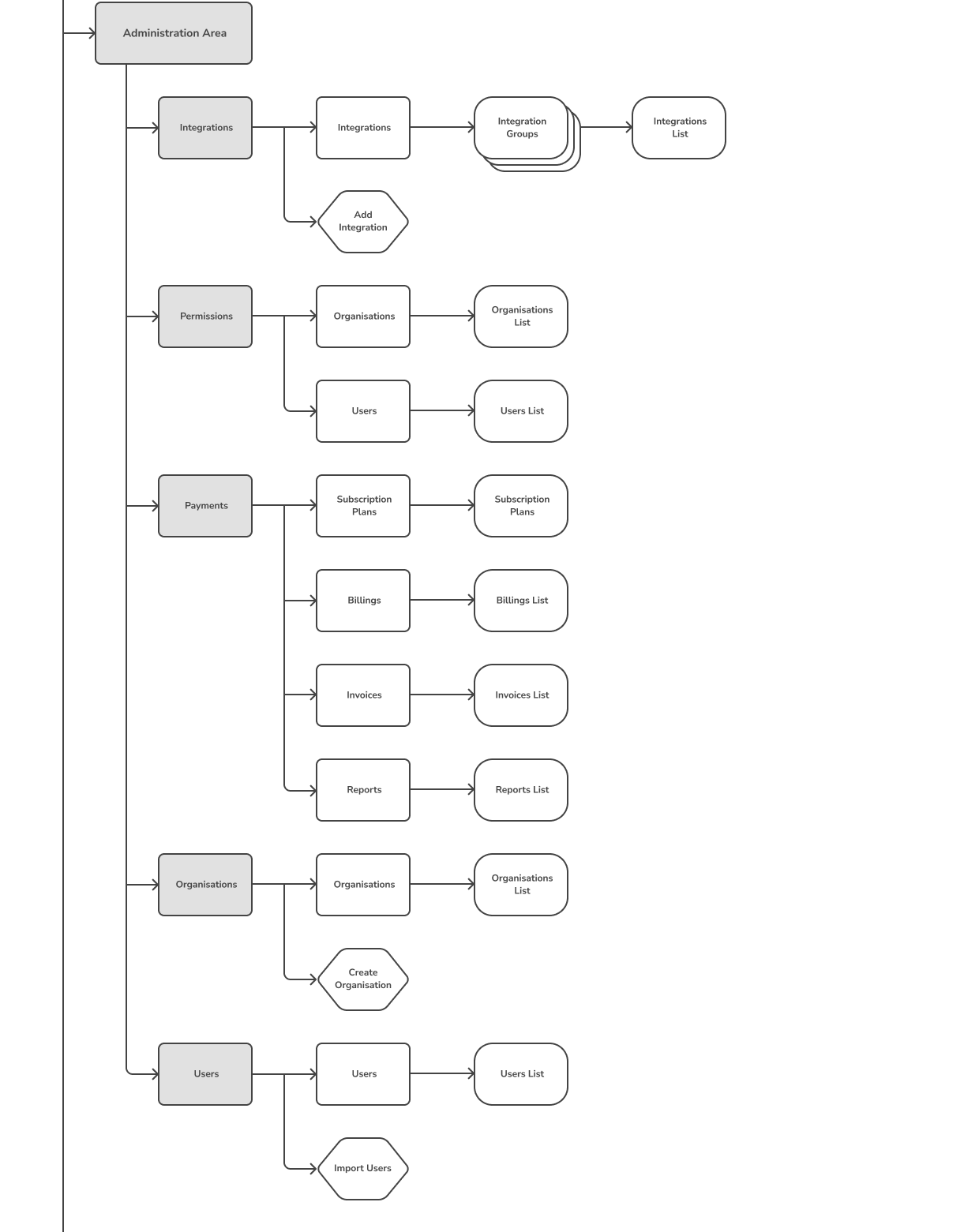
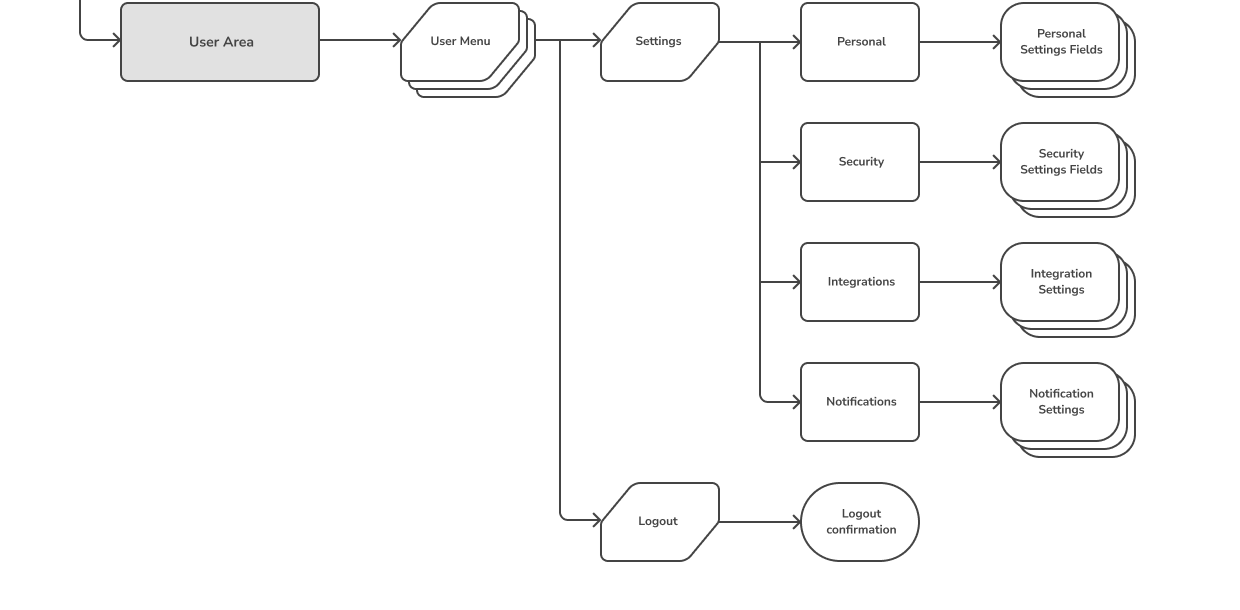
Information Architecture
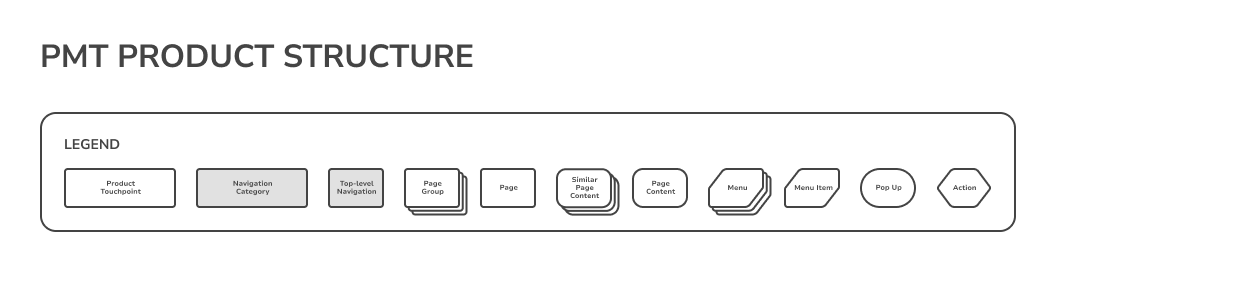
The information architecture was structured to provide a clear, logical flow of information across the platform. This included organising content in a way that reflects the priorities and daily tasks of the users, ensuring that the most critical functions are easily accessible.
User Flows
User flows were meticulously crafted for each persona identified during the research phase. These flows illustrated the steps users would take to complete tasks such as entering feedback, setting objectives, or analysing performance metrics, ensuring the system supports efficient and intuitive interactions.
Visualisation and Mockups
As part of the UX design process for PMT, the development of detailed mockups was integral to finalising the user interface and ensuring that the design met both aesthetic and functional requirements. This stage transformed the initial wireframes and user flows into high-fidelity screens that represent the final look and feel of the product.
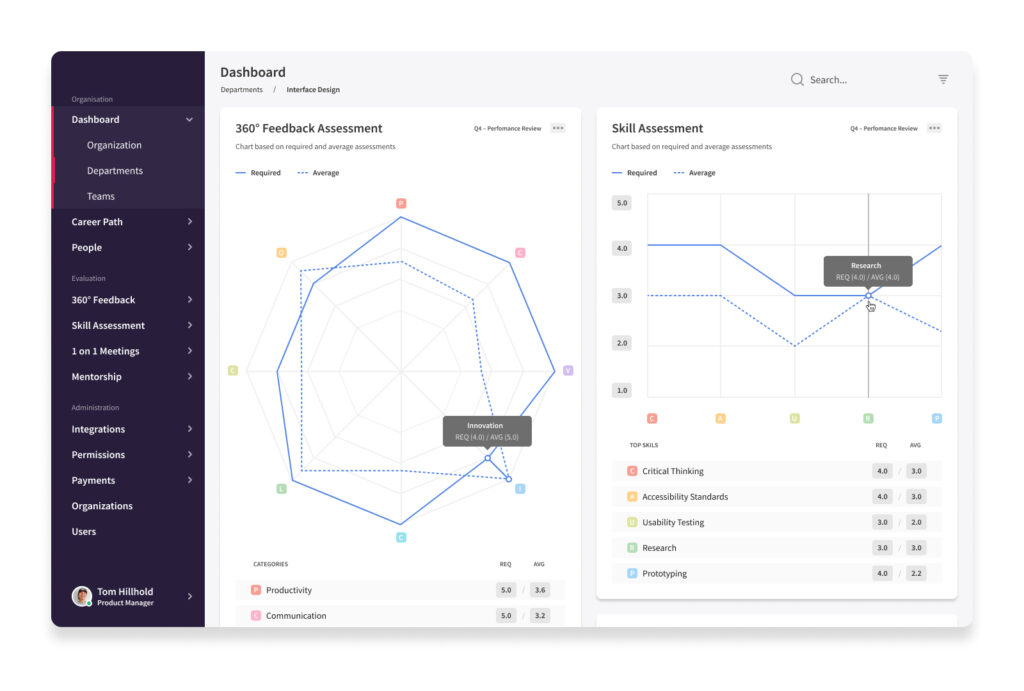
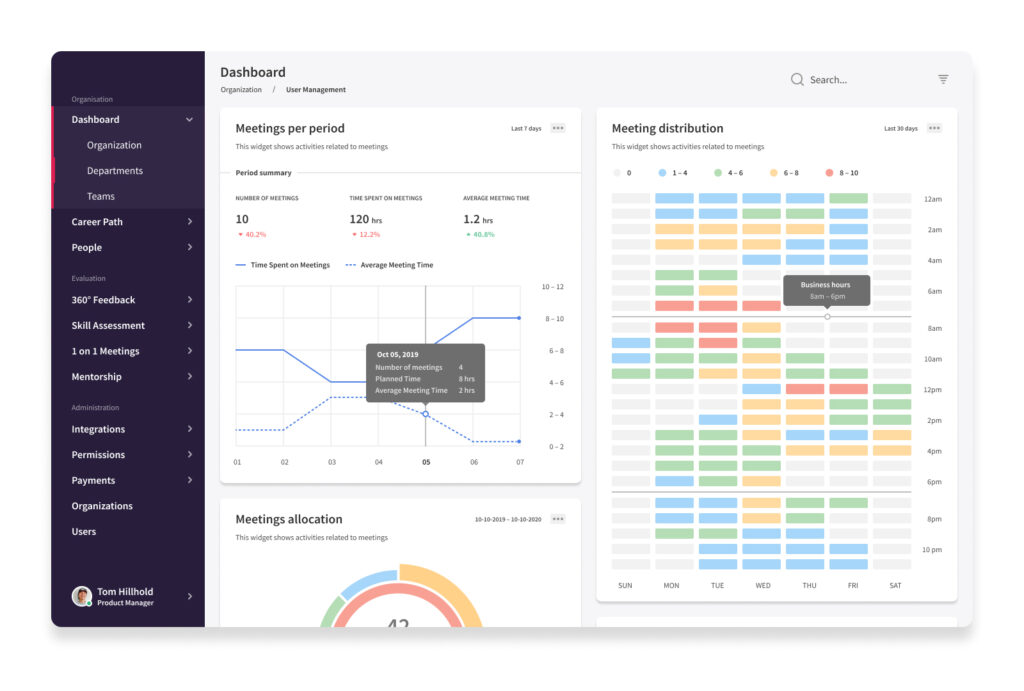
Dashboard and Role-Specific Metric
The dashboard is tailored to provide relevant metrics and KPIs depending on the user’s role within the organisation—whether they are an Admin, Manager, or User. This customisation ensures that users have immediate access to the information most pertinent to their responsibilities and objectives.
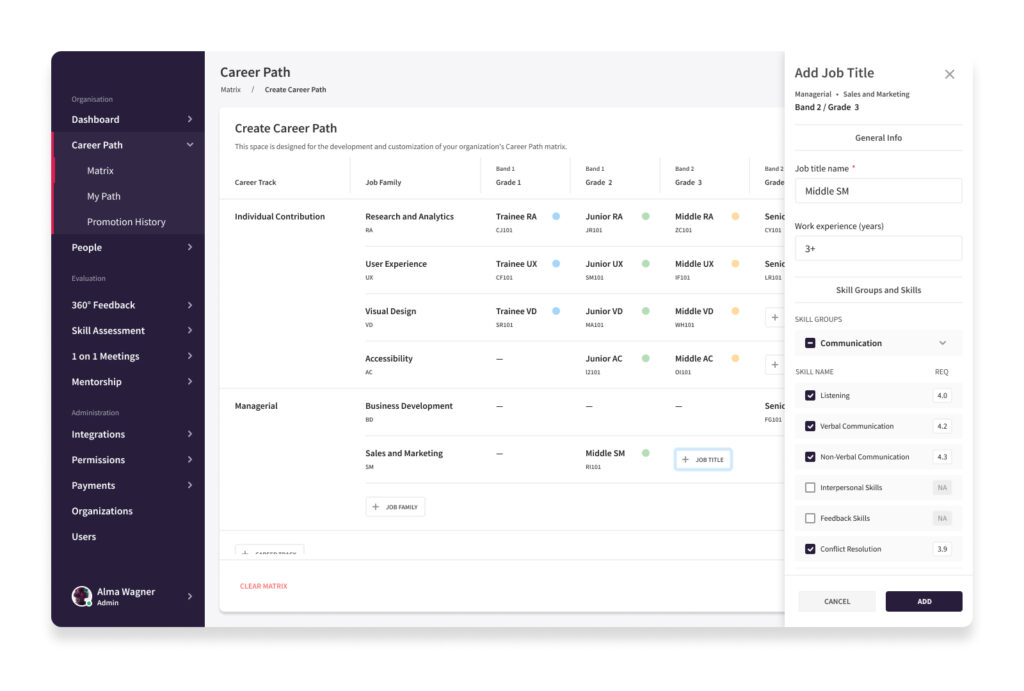
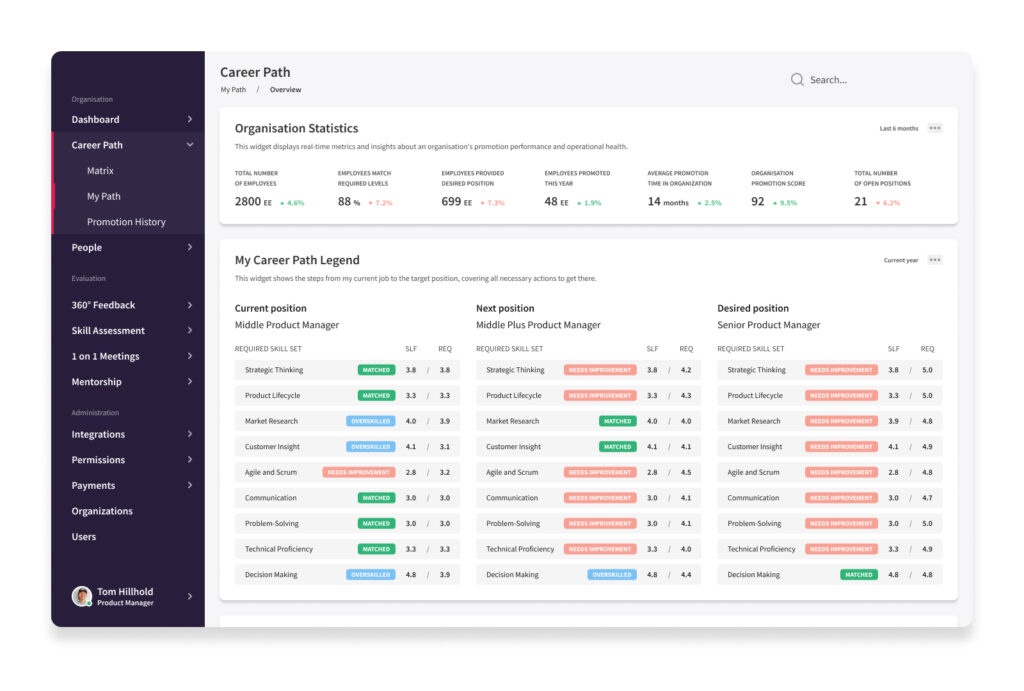
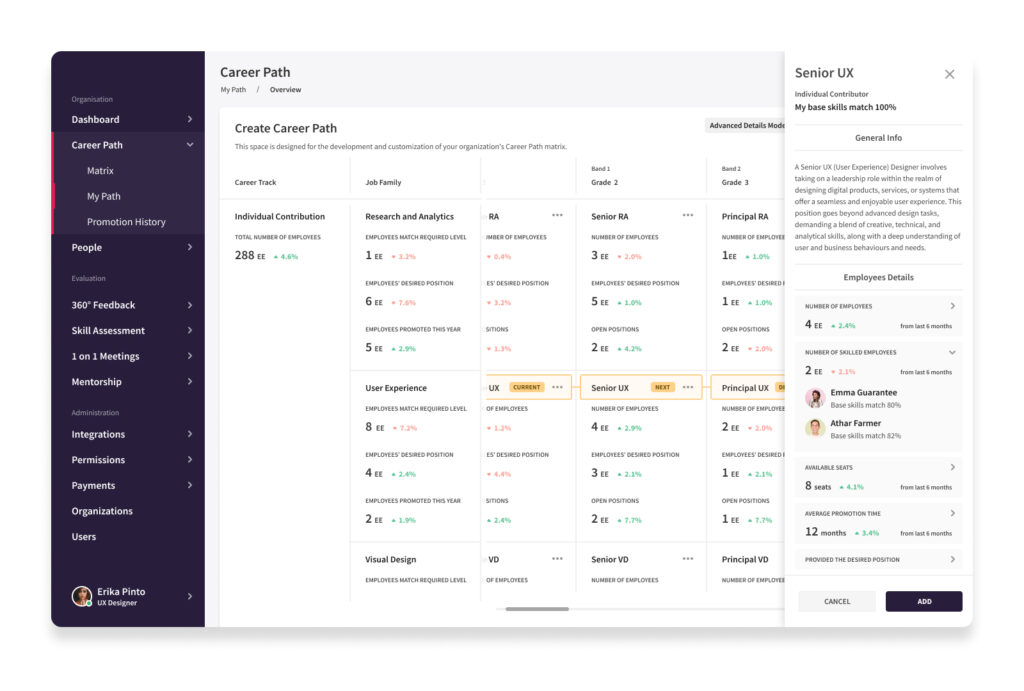
Career Path Tools
- Interactive tables and matrix views for career planning and tracking.
- Options for managing career tracks, job families, job titles, and skill groups.
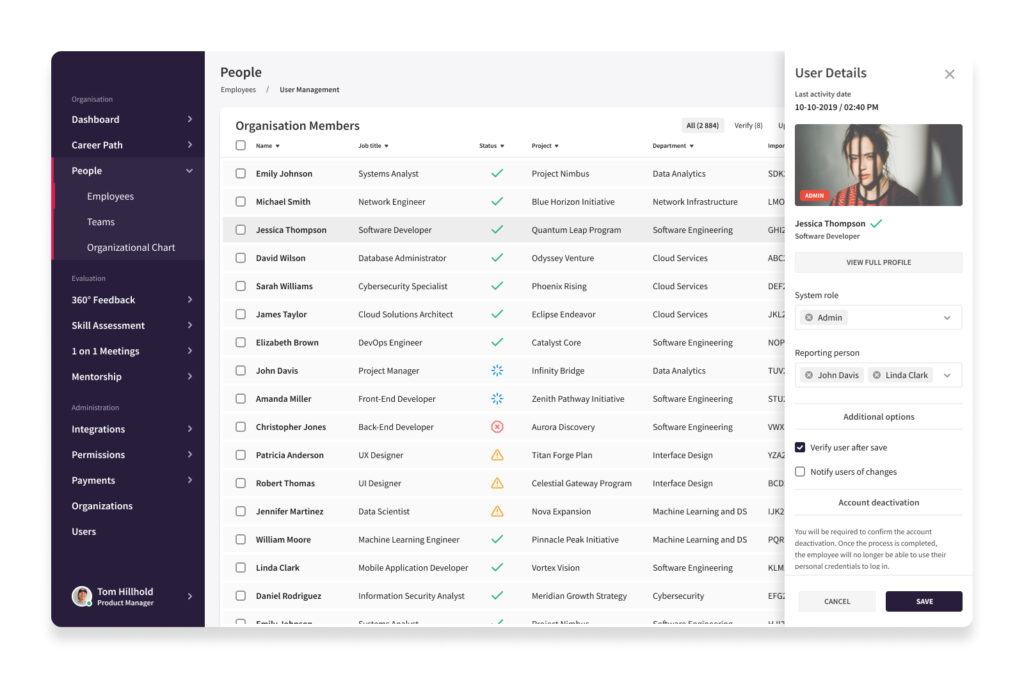
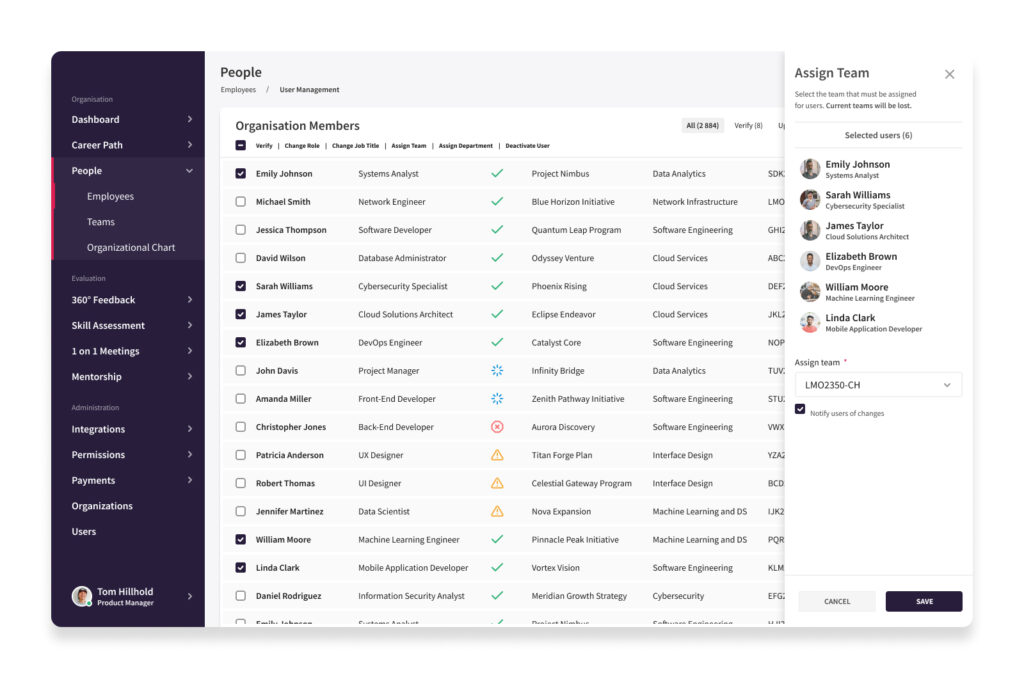
User Management
- Enables organisations to effectively manage and control access to various system functions based on user roles and permissions.
- Includes the creation, modification, and deletion of user profiles, as well as the assignment of roles and permissions to ensure appropriate access levels across the organisation.
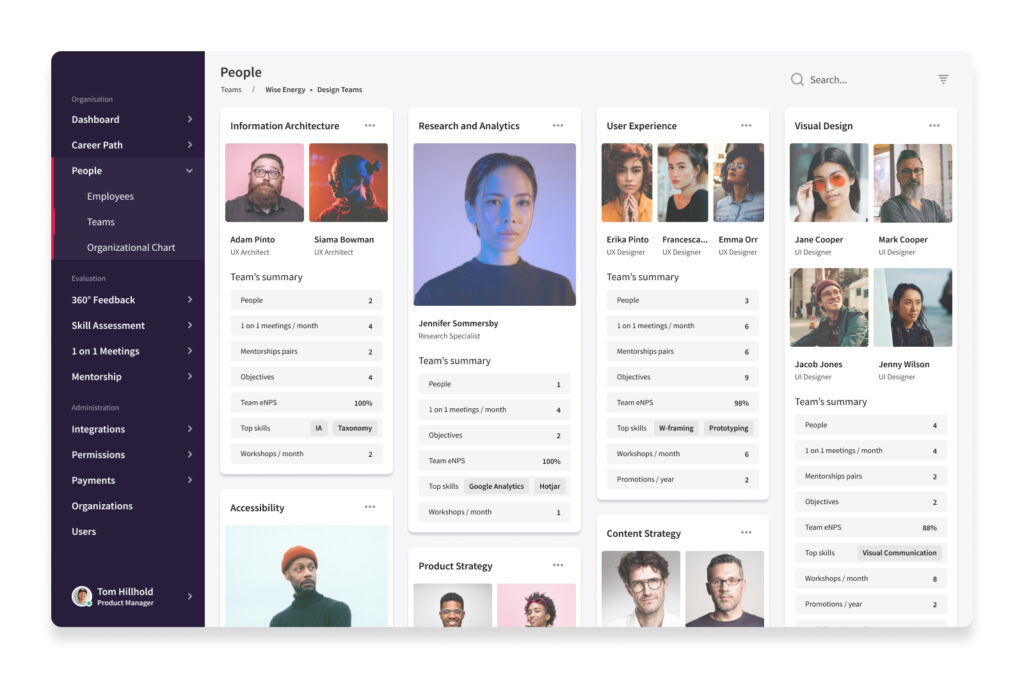
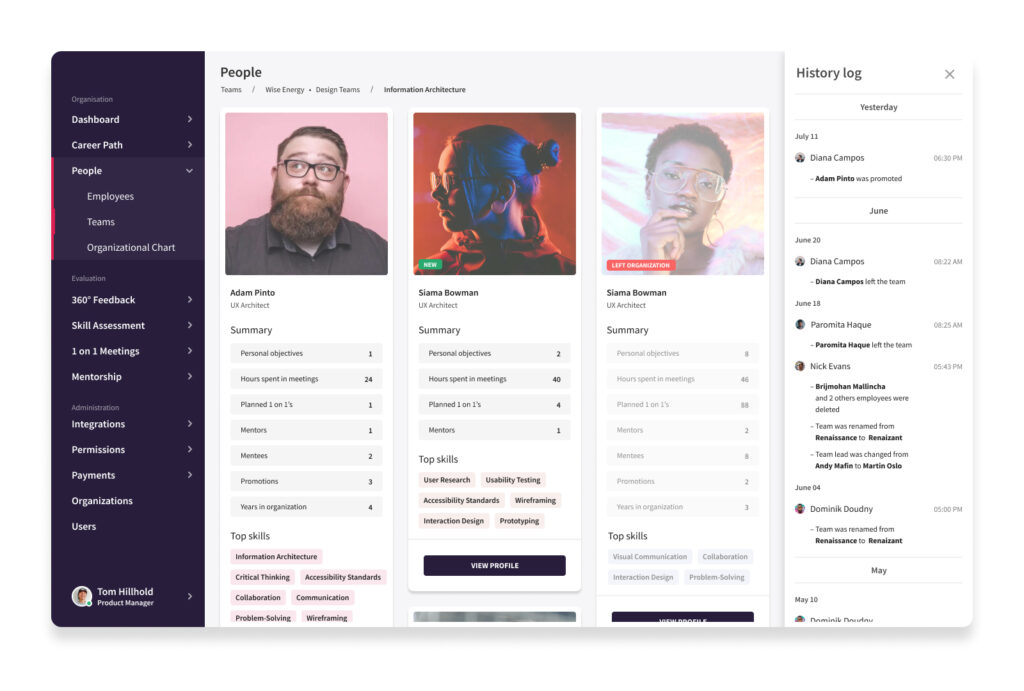
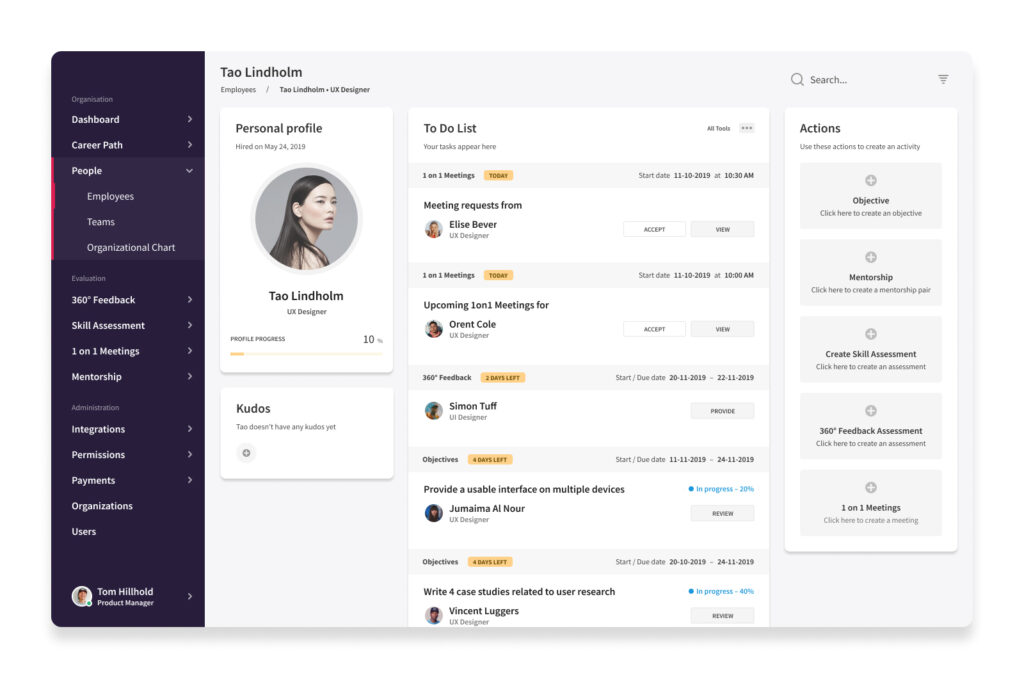
Team Management
- Tools to create and manage team objectives, skills, reviews, and project information.
- Reporting and notification functionalities.
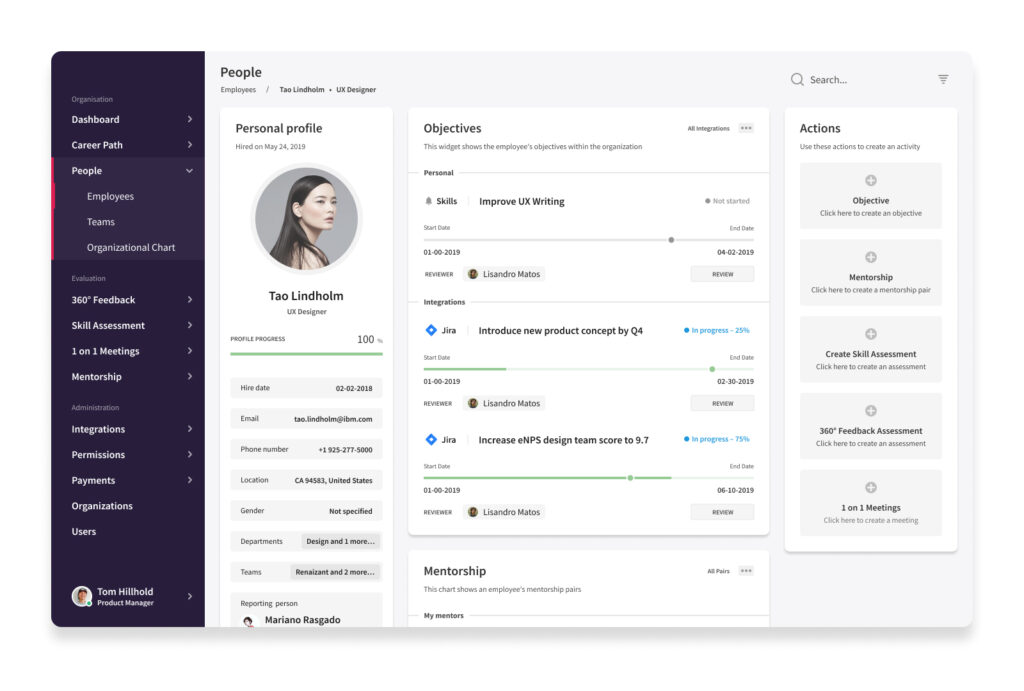
User Profile
- Detailed employee profiles, including personal and professional information.
- Integration capabilities with social networks and other external systems.
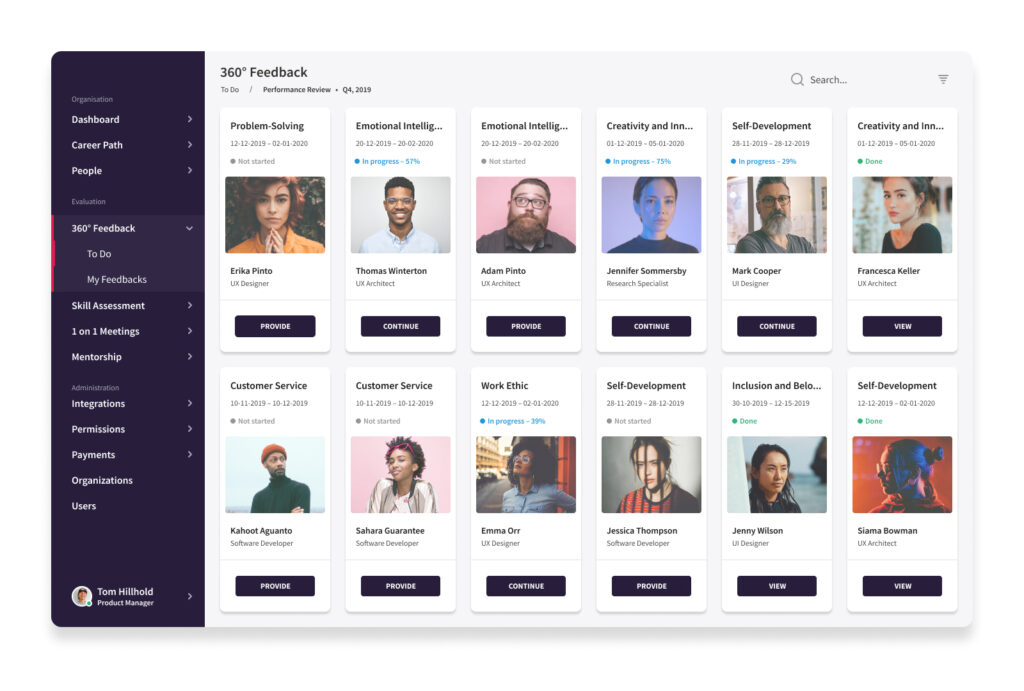
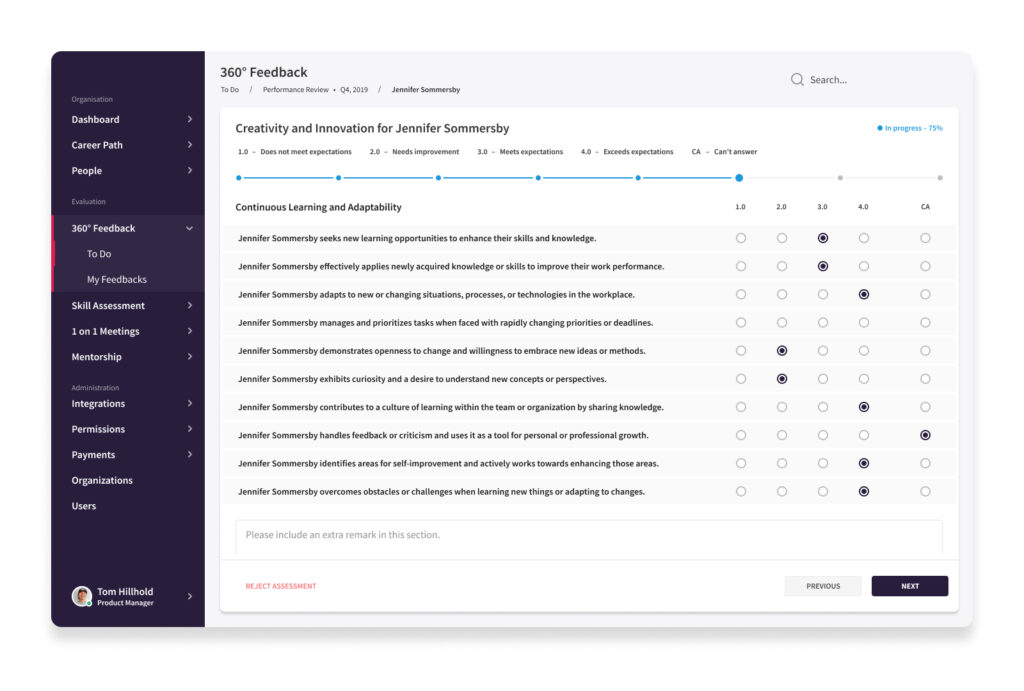
360-Degree Feedback
- Comprehensive feedback mechanism involving self-assessment, peer review, manager, and subordinate feedback.
- Dashboard widget, user profile widget, and reporting functionalities.
- Integration with other systems for notifications and settings management.
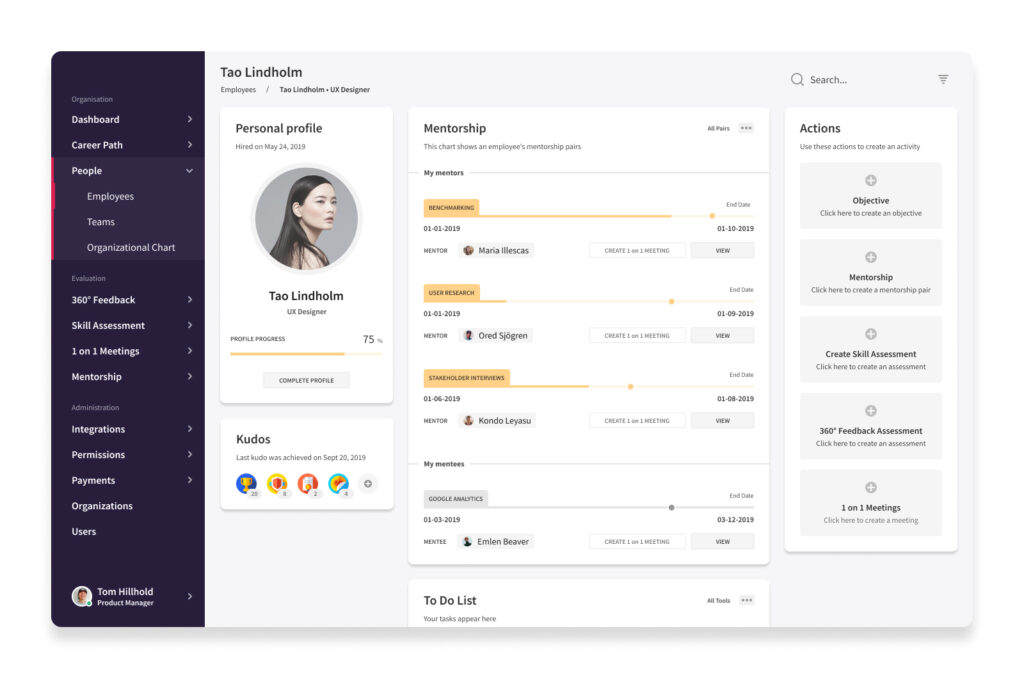
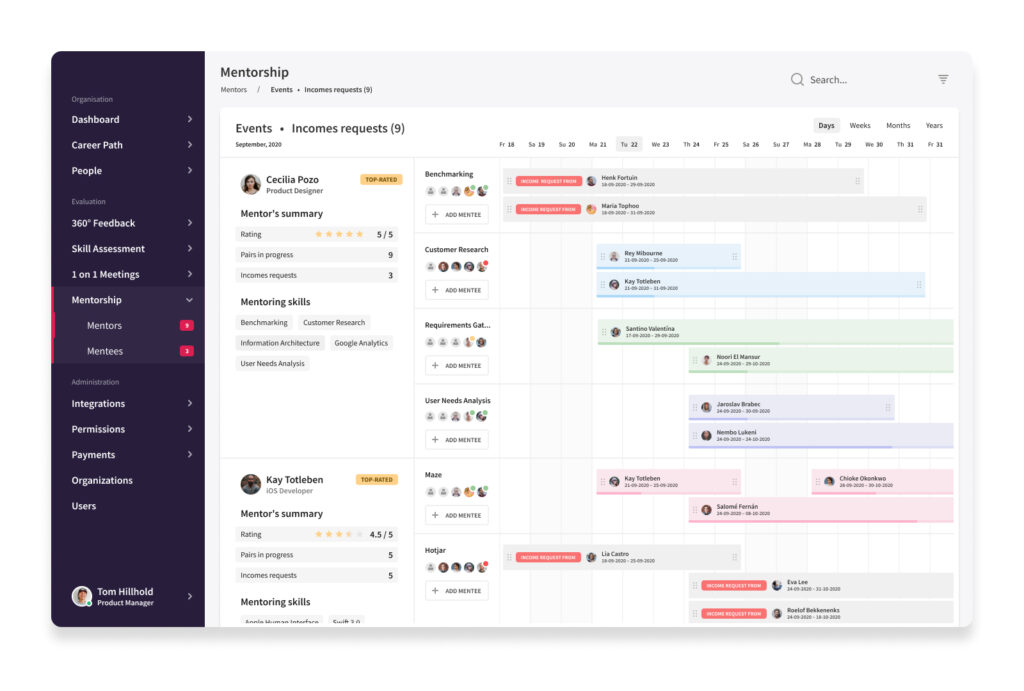
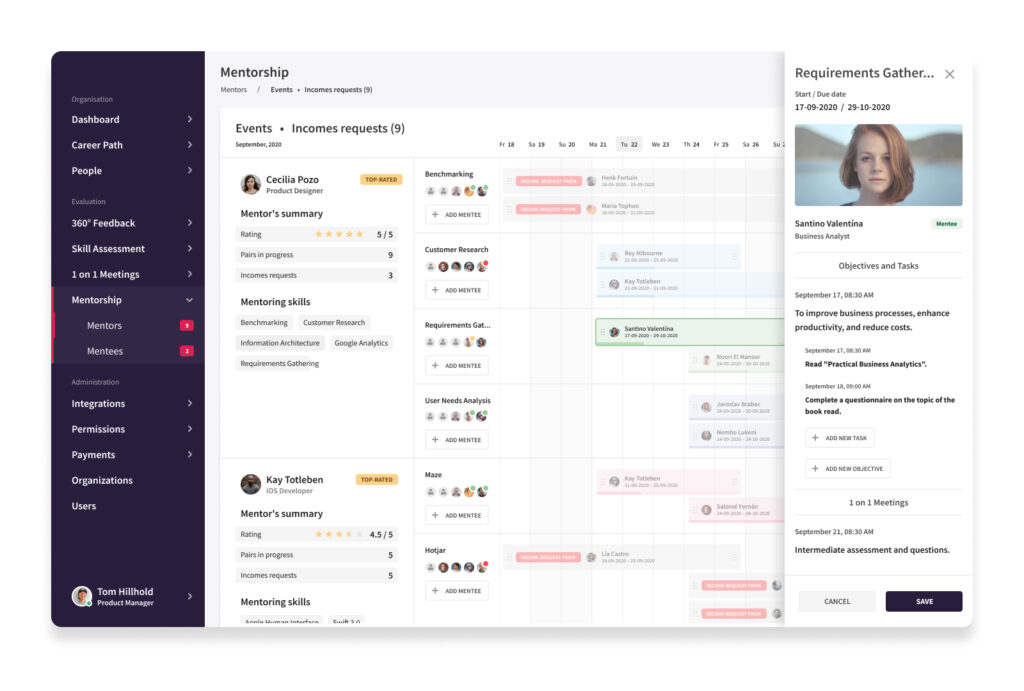
Mentorship
- The platform for managing mentor-mentee relationships and tracking their progress.
- Integration with objectives and skill development plans.
Usability Testing
Introduction to Usability Testing
Usability testing played a critical role in the early stages of PMT’s development, primarily to validate design concepts and iterate on them based on user interactions. This testing was conducted iteratively, aligning closely with my ongoing prototyping efforts to ensure that every design iteration was grounded in actual user experiences and feedback.
Testing Process and Methodology:
-
Creation of Test Scenarios: For each testing session, specific scenarios were crafted to closely mimic real-world use cases, ensuring that the tasks were relevant and directly tied to the users’ daily workflows. These scenarios guided the development of task lists that participants would undertake during the sessions.
-
Execution of Tests: Usability tests were conducted both in person and remotely via platforms like Zoom, depending on the availability and location of participants. This flexibility allowed me to gather a broad range of insights across different user environments.
-
Participant Diversity: I engaged with a total of 15 users, dividing them equally among the three primary roles within the organisation—employees, managers, and admins. This approach ensured that I captured a diverse set of user behaviours and preferences across the platform.
Analysis and Feedback Integration:
-
Affinity Diagramming: All feedback and observations were meticulously categorised using affinity diagrams. This method helped identify common patterns, dependencies between tasks, and prevalent errors across different user groups.
-
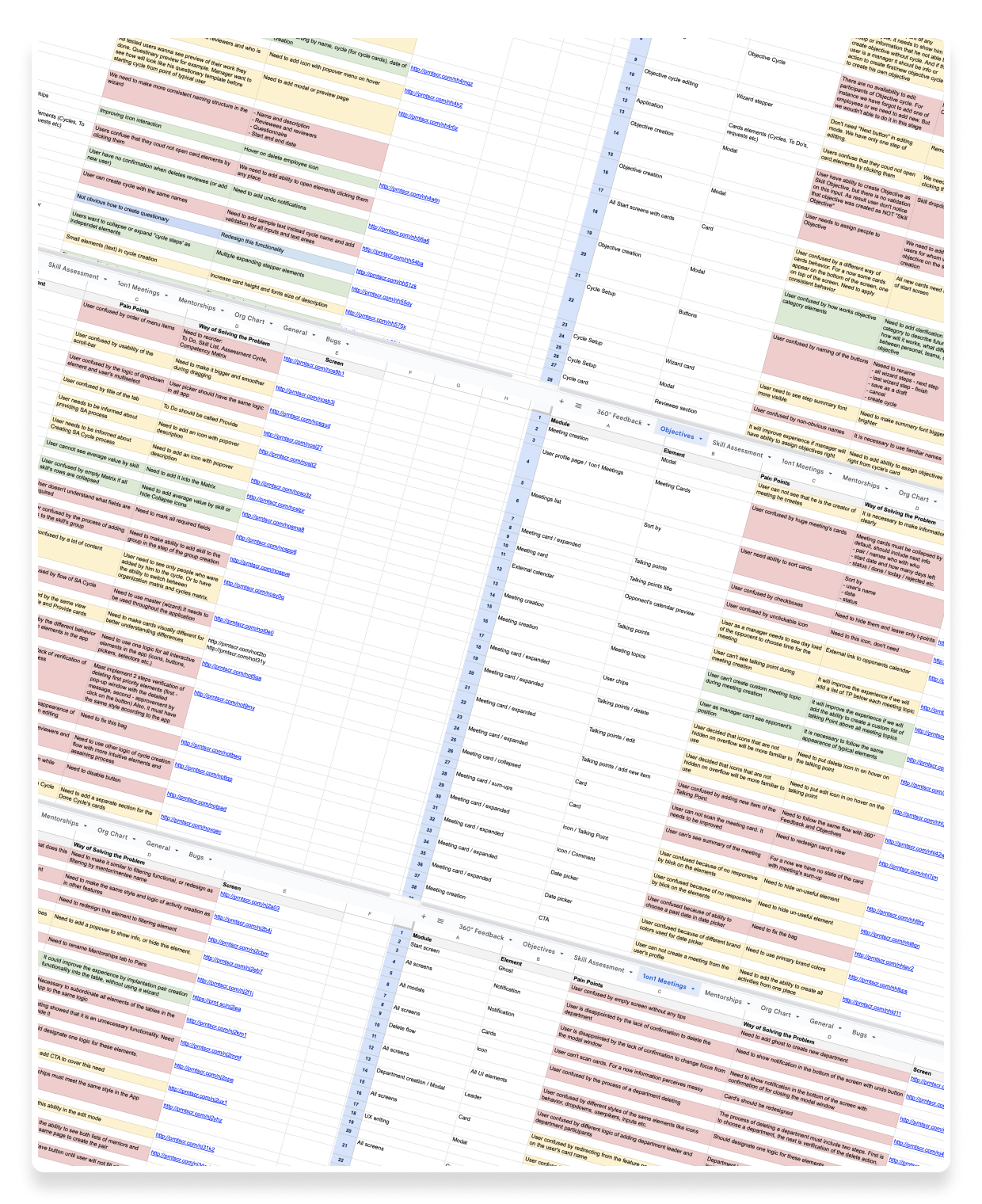
Prioritization and Iteration: The insights gained were then consolidated into an organised matrix within an Excel spreadsheet, which detailed improvement opportunities by module and feature. Collaboratively with the product team, these issues were prioritised, allowing us to address and integrate changes into the design systematically.
-
Iterative Refinement: This cyclical process of testing, feedback collection, and design modification was repeated for each work module. By refining the system iteratively, I ensured that enhancements were continuously folded back into the development cycle, significantly improving the overall usability and user satisfaction with the product.
Outcomes of Usability Testing
The iterative usability testing not only optimised PMT’s design but also profoundly impacted the product’s user-friendliness. By embedding user feedback into the development process early and regularly, I could make informed design decisions that significantly enhanced the platform’s practical utility and intuitive nature. This user-centric approach to testing and development was instrumental in delivering a product that truly resonates with its end users and effectively supports their daily HR management activities.
The UX design process for PMT was a comprehensive effort that balanced technical functionality with user-centric design principles. By thoroughly understanding and integrating the needs of employees, managers, and admins, the platform is uniquely positioned to transform the HRM landscape. The final design delivers a system that meets the strategic business objectives and offers a seamless and engaging user experience, ensuring widespread adoption and satisfaction. Through iterative testing and feedback, PMT has been refined to the point where it not only supports but enhances HR departments’ daily activities and strategic functions globally.
IV. Evaluation and Analytics
To ensure that PMT delivers tangible benefits to businesses, my team and I employ a data-driven approach to evaluate and refine the system continuously. This involves tracking a suite of KPIs specifically tailored to the needs and expectations of B2B SaaS clients in the HR tech space.
PMT’s Impact
My team and I leverage key performance indicators to gauge the system’s impact on business operations, user engagement, and financial metrics. Here are specific KPIs used to demonstrate PMT’s success:
-
Customer Acquisition Cost: Reduced CAC by 28% year-over-year, indicating more efficient marketing strategies.
-
Customer Lifetime Value: Increased CLTV by 32% within the first year of PMT implementation, reflecting enhanced customer retention and upselling.
-
Monthly Recurring Revenue Growth Rate: Achieved a steady MRR growth rate of 11% per month, indicating strong and consistent product adoption.
-
Churn Rate: Maintained an industry-low churn rate of less than 6%, demonstrating high customer satisfaction and product stickiness.
-
Average Revenue Per User: Increased ARPU by 23% over six months, signifying enhanced revenue generation capabilities.
-
Net Promoter Score: Achieved an NPS of 81, indicating high customer satisfaction and loyalty.
-
Adoption Rate: Over 83% adoption rate within the first two weeks of onboarding, reflecting effective user onboarding processes.
-
Operational Efficiency Improvement: Reduced average HR operational times by 44%, significantly enhancing productivity.
-
Employee Productivity Rate: Productivity increased by an average of 13% across organisations using PMT.
These metrics provide a comprehensive picture of PMT’s performance and its impact on client organisations. By continuously monitoring these KPIs, my team and I are able to make informed decisions that drive improvements in the platform, ensuring it remains competitive and closely aligned with the client’s evolving needs.
Including specific values for each KPI helps stakeholders understand the tangible benefits PMT brings to their operations, reinforcing the platform’s value proposition in a competitive B2B SaaS marketplace.
Business Impact
PMT’s design and functionality are crafted to enhance user experience and deliver significant business impact. By focusing on key metrics, my team and I demonstrate how PMT supports business growth, operational efficiency, and strategic HR management measurably. Here are specific KPIs used, with illustrative values to demonstrate business impact:
-
Customer Retention Rate: Achieved a customer retention rate of 92% annually, indicating high customer satisfaction and strong product-market fit.
-
Reduction in HR Operational Costs: Reduced HR operational costs by 44% within the first year of implementation.
-
Time-to-Productivity for New Hires: Reduced time-to-productivity by 42%, with new hires reaching full productivity within two months of onboarding.
-
Employee Engagement Scores: Improved employee engagement scores by 27% post-PMT deployment.
-
Average Revenue Per Employee: Increased average revenue per employee by 21% since implementing PMT.
The business impact of PMT is clear and significant. These metrics validate the effectiveness of PMT as a transformative HR tool and demonstrate its role in driving tangible business results. By improving operational efficiencies, enhancing employee productivity, and fostering a positive work environment, PMT delivers a compelling return on investment for any organisation looking to innovate its HR practices. These improvements are crucial for businesses that maintain a competitive edge in the dynamic market landscape.
V. Lessons Learned and Future Directions
Collaboration with Domain Experts
Engaging with HR and technology experts provided invaluable insights into industry-specific challenges and expectations. Collaboration ensured that PMT was developed with a deep understanding of HR workflows, compliance needs, and technological integrations, making it a robust and relevant tool.
Insights from Users and Tests
Continuous feedback from end-users throughout the development process was crucial in shaping PMT’s user interface and functionality. User testing sessions helped identify pain points and usability challenges, guiding iterative design improvements that significantly enhanced user satisfaction and system usability.
Importance of Analytical Data
Leveraging analytics tools like Google Analytics, Mixpanel, Hotjar, UXCam, and UserTesting provided a data-driven foundation for decision-making. These tools enabled the collection of quantitative and qualitative data on user behaviour, interaction patterns, and feedback across different stages of the product lifecycle, informing feature enhancements and optimisation strategies.
Integration of Real-Time Feedback Mechanisms
Implementing real-time feedback within PMT helped capture immediate user reactions and suggestions, facilitating rapid adjustments. This approach allowed for agile responses to user needs and helped maintain a high level of engagement and user experience.
Future Directions in Analytics and AI
Future enhancements will integrate more advanced analytics and artificial intelligence to provide predictive insights and personalised user experiences. By expanding AI, PMT aims to anticipate user needs, suggest automated actions, and streamline HR processes even further, ensuring the platform remains at the cutting edge of HR technology.
Expanding User Training and Support
Ongoing user education and robust support systems will be crucial as PMT continues to evolve and add new features. Enhanced training programs and responsive support services will ensure users can leverage all functionalities effectively, maximising the return on investment for organisations.
The lessons learned from the development of PMT underline the importance of a user-centred design approach underpinned by strong domain expertise and rigorous data analysis. As I move forward, these lessons will guide the continuous improvement of PMT, ensuring it meets and exceeds the evolving needs of the HR management landscape. The focus on advanced analytics and AI will drive future innovations, further establishing PMT as a leader in the HRMS space.
VI. Summation
The development and launch of PMT have marked a significant milestone in the HRMS landscape. As the lead product designer, my involvement allowed me to steer the product towards functional excellence and reshape how organisations manage and engage their workforce.
Business Success and Expansion
-
Market Impact: Since its launch, PMT has seen remarkable market penetration, quickly becoming a preferred choice for businesses seeking innovative HR solutions. The platform’s robust functionality and user-centric design have led to significant business success, evidenced by a surge in new customer acquisitions and a high retention rate.
-
Financial Growth: The success of PMT has attracted substantial new investments, enabling me to scale operations and expand the market reach. These financial injections have been pivotal in accelerating product development and enhancing service offerings.
-
Client Testimonials and Case Studies: Positive feedback from a diverse range of clients has underscored PMT’s impact in transforming HR practices. Success stories and case studies from key clients have further solidified the reputation of the industry.
Product Team Expansion and Scaling
-
Team Growth: The product team have significantly been scaled in response to the growing demand and expanding feature set. This expansion includes adding specialists in AI, machine learning, and data analytics to drive the next generation of HRMS innovation.
-
Global Reach: With new investments, PMT is set to broaden its presence in international markets, adapting to various labour laws and HR practices to ensure global applicability and compliance.
-
Innovation and R&D: Continued investment in research and development has been a cornerstone of the strategy to maintain a competitive edge. The focus on integrating cutting-edge technologies like AI for predictive analytics and machine learning for personalised user experiences is setting new industry standards.
Commitment to Continuous Improvement
-
User Feedback Loop: Integrating continuous user feedback into the development cycle remains a priority. This approach ensures that PMT not only meets but anticipates user needs, proactively adapting to HR landscape changes.
-
Training and Support Systems: As part of my commitment to client success, my team and I have enhanced training and support infrastructure to ensure that users maximise the benefits of all PMT features. Ongoing training programs and robust technical support are tailored to the needs of diverse user groups.
Looking Forward
-
Strategic Partnerships: PMT is actively exploring partnerships with leading technology firms to integrate additional functionalities that complement the HRMS capabilities.
-
Sustainability and Social Responsibility: As PMT grows, my team and I are committed to incorporating sustainable practices into business operations and supporting social responsibility initiatives that benefit our communities.
PMT’s journey from conception to market leader has been driven by a relentless focus on innovation, user satisfaction, and business impact. As I continue to evolve and expand, my commitment to delivering a superior HRMS that empowers organisations to manage their human resources more effectively remains unwavering. The future holds promising opportunities for PMT to revolutionise HR management further, and my team and I are excited to lead the way in this dynamic industry.